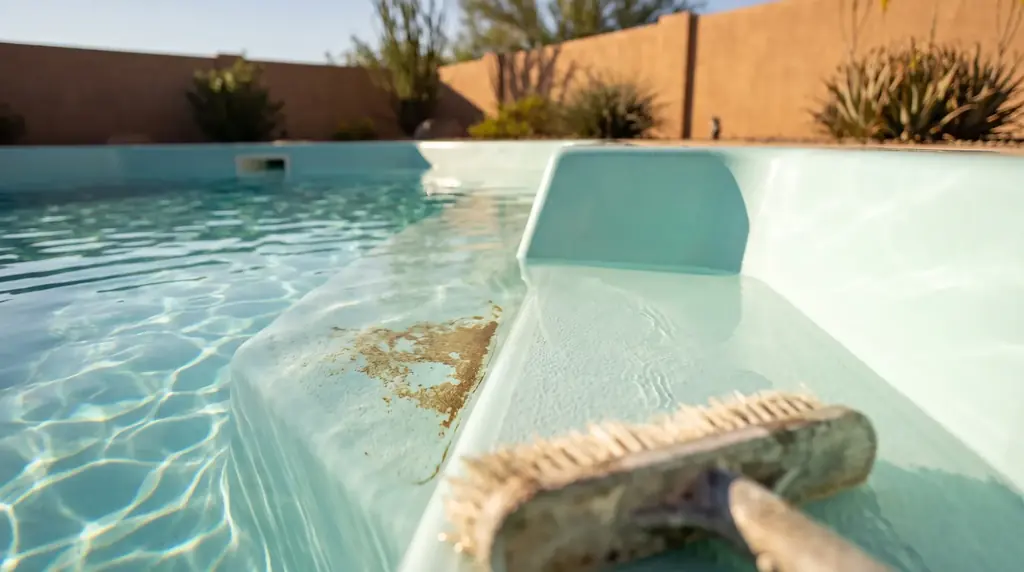
Stains on a Fiberglass Pool: What Causes Them and How They Come Off
- Fiberglass pools only, installed and serviced
- Permit and HOA paperwork handled
- Crane access and caliche checked before you sign
- Written, itemized quotes
Most stains on a fiberglass pool fall into three groups: calcium from hard water, metals from the water or the equipment, and organic stains from leaves and algae. Each one comes off a different way, so the first job is always to work out which you have. Treat a metal stain like an organic one and nothing happens. Scrub any of them with an abrasive and you damage the gelcoat permanently.
The good news is that gelcoat is smooth and non-porous, so most stains sit on the surface instead of soaking in. With the right treatment, the majority come off without draining the pool.
What causes fiberglass pool stains
Calcium from hard water
Tucson water is hard, and evaporation in dry desert air concentrates the calcium in your pool every time you top it off. When pH and calcium run high, it comes out of the water as a white or grey crust, usually in a line at the waterline or on the steps. It feels rough to the touch.
Metals
Iron, copper and manganese show up as brown, rust, blue green, teal or dark purple stains, often on steps, benches and around fittings. They come from fill water, especially well water, from corroding heater parts or fittings, and from some copper based algaecides. Low pH makes metal stains more likely, because acidic water picks up metal from the equipment.
Organic stains
Green, brown or tea colored marks where leaves, mesquite pods, palo verde blossoms or algae sat on the surface. Monsoon storms are the usual cause in Tucson, when debris lands in hot water and sits on the floor until someone gets it out.
Identify the stain before you treat it
Two simple spot tests tell you most of what you need to know. Do them on a small area.
- Vitamin C test for metals. Hold a vitamin C tablet against the stain for a short while, wrapped in a sock on a pole if it is out of reach. If the stain lightens, it is almost certainly metal.
- Chlorine test for organic stains. Hold a small amount of granular chlorine against the stain the same way, briefly. If it lightens, it is organic. Do not leave chlorine sitting on gelcoat.
- Feel test for calcium. If it is white or grey and gritty, and neither test touches it, it is likely scale.
If none of them moves it, or it covers a large area, stop there and get it looked at. Some discoloration is the gelcoat itself fading or chalking, which is a refinishing job, not a stain.
How each stain comes off safely
Calcium scale
Start with the chemistry. Lower pH and alkalinity into the ranges your shell maker specifies, then use a scale remover or a calcium remover labeled safe for fiberglass, applied with a soft cloth or nylon brush. A sequestering product added to the water helps keep calcium in solution afterward. Heavy, long established scale is best handled by a professional, because getting it off without dulling the gelcoat takes care.
Metal stains
Metal stains are usually lifted with an ascorbic acid based treatment added to the water, with chlorine lowered first so it does not fight the treatment. Afterward a metal sequestrant holds what is left in solution, and chlorine is brought back up slowly. Then find the source. If it is fill water, a pre-filter on the hose helps. If it is equipment, the corroding part needs replacing, or the stain will come back.
Organic stains
Shock the pool, brush the stain with a nylon brush, and repeat if needed. Most organic stains lift within a short time once the chlorine is up. Then keep debris off the floor, especially after monsoon storms.
What not to use on gelcoat
Gelcoat is tough, but its gloss is a thin surface layer, and once it is scratched or dulled it holds stains and algae more easily than before. Never use:
- Melamine sponges such as a magic eraser
- Pumice stones, scouring pads or abrasive powders
- Stainless steel or wire brushes
- Acid washing, which is a plaster treatment
- Household cleaners not labeled safe for pools
And never drain a fiberglass pool to get at a stain. An empty shell can shift or lift out of the ground. If a stain needs the water down, that is a job for a professional with a plan.
Fiberglass pool stain questions
Can I use a magic eraser on a fiberglass pool?
No. A melamine sponge works because it is a fine abrasive, and on gelcoat it wears away the glossy surface a little each time. A dulled surface picks up stains and algae more easily. Use a soft cloth or nylon brush with a cleaner made for fiberglass.
How do I get stains off my fiberglass pool?
Identify the stain first. Calcium needs pH lowered and a fiberglass safe scale remover. Metal stains respond to an ascorbic acid treatment followed by a sequestrant. Organic stains usually lift with shock and a soft brush. Never scrub with anything abrasive.
How do I remove brown stains from my fiberglass pool?
Brown usually means iron or organic matter. Hold a vitamin C tablet against it: if it lightens, it is metal and needs an ascorbic acid treatment and a sequestrant. If granular chlorine lightens it instead, it is organic and will come off with shock and brushing.
What is the best stain remover for fiberglass pools?
The one that matches the stain and is labeled safe for fiberglass. A calcium remover for scale, an ascorbic acid based treatment for metals, and chlorine for organic stains. No single product removes all three.
Get the stain off without hurting the finish
Send us a photo of the stain and tell us roughly how long it has been there. We will tell you what it is likely to be and what it will take.
- Call(520) 555-0127
- Emailinfo@tucsonfiberglasspools.com
- HoursMon to Fri, 7am to 5pm. Saturday by appointment.
Thanks, we have your request
We will call you to set up a free visit. If it is urgent, call (520) 555-0127.
Online requests are not switched on yet
Nothing was sent. Please call (520) 555-0127 and we will set up your free visit.