Stains sit on the surface
Because gelcoat is non-porous, most stains stay on top of it rather than soaking in. They can usually be lifted with the right treatment instead of being ground away.
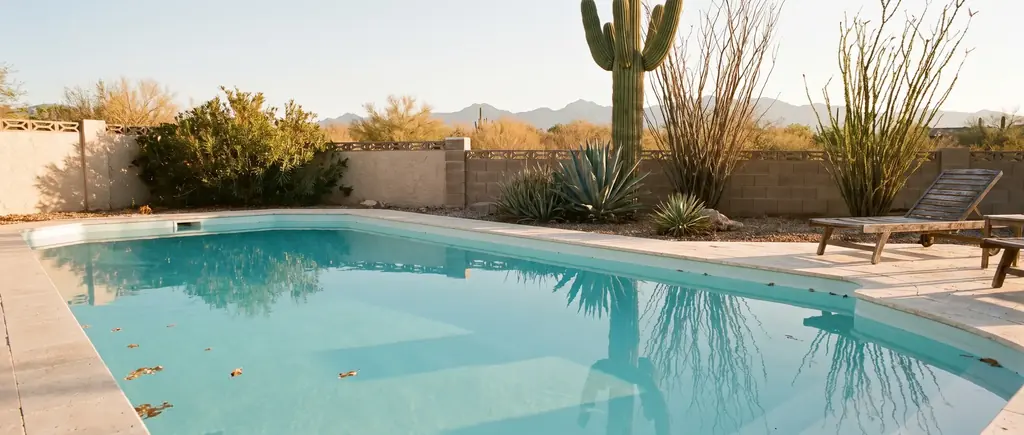
Fiberglass pool resurfacing done in the right order: stains lifted first, faded gelcoat restored where it can be, and a full refinish only when an older shell truly needs one.
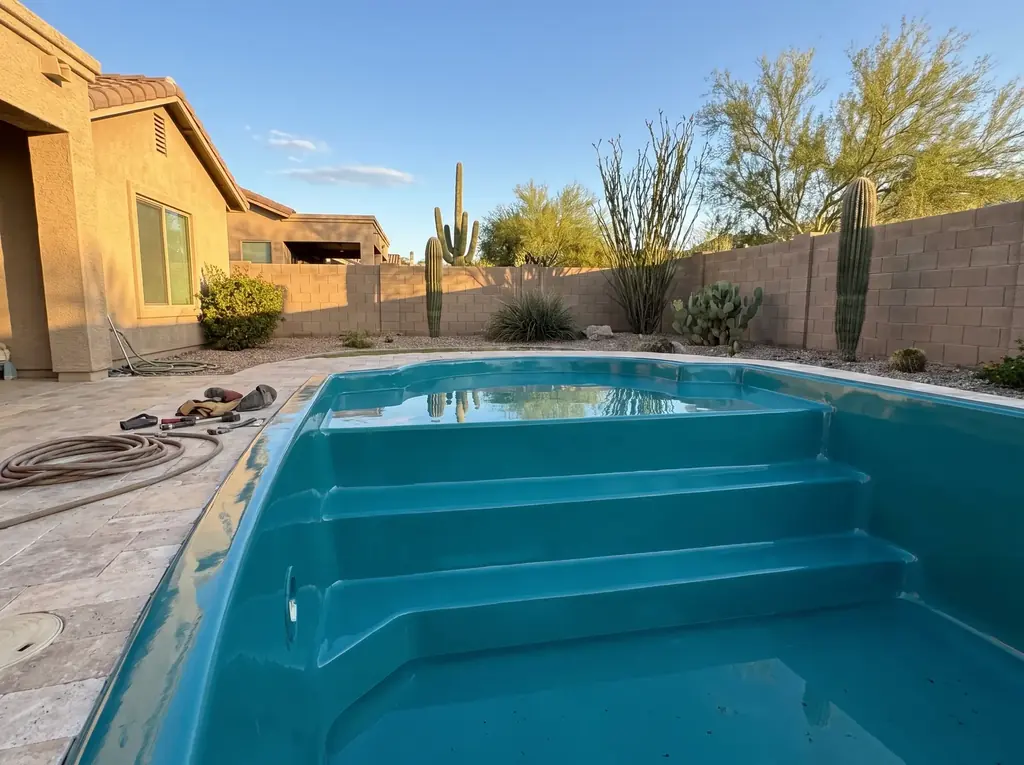
When a fiberglass pool starts to look rough, owners usually assume it needs resurfacing. Often it does not. A lot of what makes gelcoat look old in Tucson sits on top of the surface: a calcium line from hard water and evaporation, brown or green tinges from metals, or dark marks left by leaves and monsoon debris. Those usually come off without touching the finish.
Below the stains there is fading and chalking. Years of desert sun and water that ran out of balance can leave gelcoat dull and powdery to the touch. In many cases that can be cleaned, polished and protected back to a good gloss.
Full refinishing is for the shells that are past that point: older pools with widespread crazing, heavy blistering or a finish that has worn thin. We do that work too, and we tell you honestly which of the three your pool needs.
We refinish fiberglass pools only, including pools installed by other companies. We do not resurface or replaster concrete pools, and we do not replace vinyl liners.
Plaster gets replaced. Gelcoat usually gets restored. That difference is a big part of why fiberglass costs less to own in the desert.
Because gelcoat is non-porous, most stains stay on top of it rather than soaking in. They can usually be lifted with the right treatment instead of being ground away.
Tucson hard water leaves calcium at the waterline. On plaster it bonds into a crust. On gelcoat it typically comes off with a cleaner made for fiberglass.
Concrete pools commonly need new plaster every 10 to 15 years. A fiberglass pool is not replastered, and with balanced water a full refinish is typically decades away, if it is ever needed.
UV resistant gelcoat holds up to the desert sun, but decades of it can dull the surface. Light chalking can often be polished out and protected, short of a full refinish.
Calcium scale at the waterline, metal stains from source water or corroding equipment, and organic stains from leaves, pods and monsoon debris, each treated for what it actually is.
Dull, powdery or faded gelcoat cleaned, polished and protected to bring back gloss and color where the finish is still sound.
For older pools with widespread crazing, blistering or worn-through gelcoat: surface prep, repairs, and a new finish system made for fiberglass.
We test the water, identify each stain by type, check the gelcoat for chalking, crazing and blisters, and tell you which level of work your pool needs.
Most stains come back if the water that caused them is not fixed. We correct the balance, address metals in the water, and keep pH in the widely published 7.2 to 7.8 range, following the shell manufacturer's guidelines for everything else.
Stain treatment, cleaning and polishing, or full surface prep and a new finish, depending on what the shell needs. Damaged areas are repaired before any new finish goes on.
Where water came down, the pool is refilled and balanced. You get a short care plan so the new finish stays clean through the next summer and monsoon season.
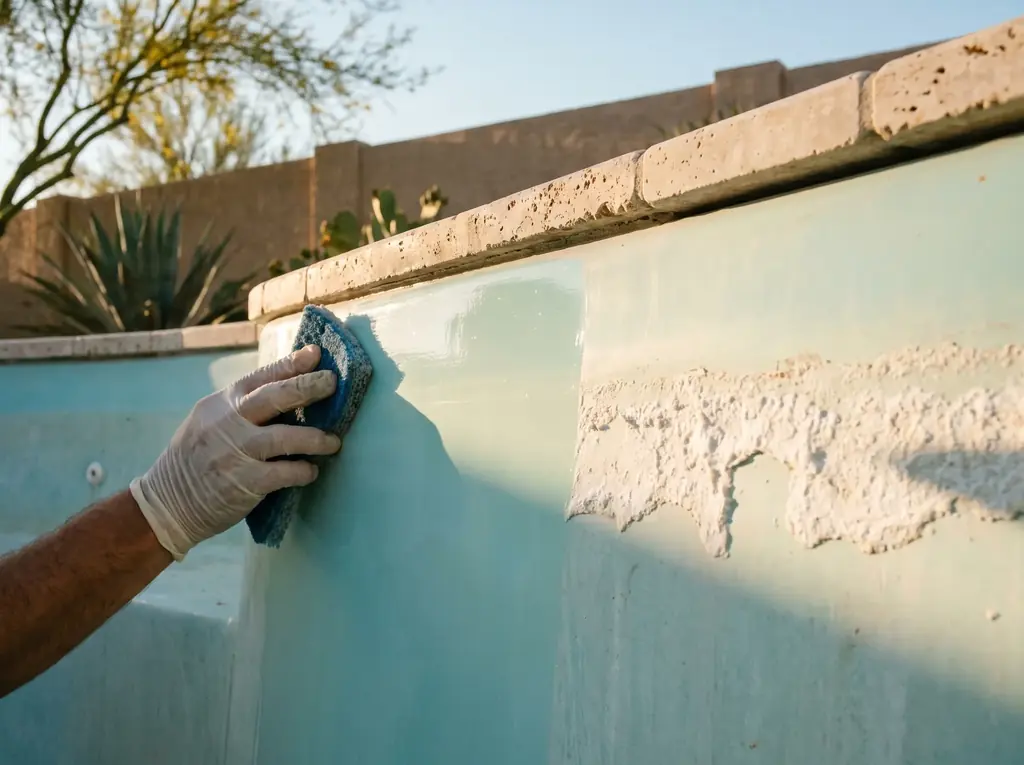
Send us photos of the stains or the finish, close up and from a distance, and tell us how long they have been there.
We test the water, identify the stains, check the gelcoat by hand and by eye, and look for cracks or blisters that need repair first.
You get a written plan that starts with the least invasive option likely to work, and explains when a full refinish would be the better call.
Stain treatments are usually done with the water in. A full refinish needs the pool lowered or emptied, which we do only to a plan, because a fiberglass pool should never be fully drained without a professional.
Polishing and protecting a sound finish, or prep, repairs and a new finish on an older shell, given the cure time it needs in our heat.
The pool goes back to full, the water is balanced, and we check the finish again once it has been in service.
We only work on fiberglass. Stain chemistry, polishing gelcoat and refinishing a shell are fiberglass skills. A crew that mostly resurfaces plaster pools is set up to grind and replace, which is rarely what gelcoat needs.
We start small. If a stain treatment or a polish will get your pool looking right, that is what we recommend. A full refinish is a bigger job, and we suggest it only when it is the honest answer.
And we fix the cause. Most staining in Tucson comes back to hard water, metals and water balance. We correct those, and our weekly service can keep them corrected, so the finish stays clean.
Send us a few photos of the worst spots and one of the whole pool. We will tell you what we think they are and what it will take.
We have not collected any reviews yet. When we do, they will appear here in full.
The pool is lowered or emptied to a plan, the old surface is cleaned and sanded, cracks and blisters are repaired, and a new finish system made for fiberglass is applied and allowed to cure before the pool is refilled and balanced. It is a bigger job than stain removal or polishing, which is why we check whether those will do first.
Start by working out what the stain is. Calcium scale, metal stains and organic stains each come off differently. Use only products labeled safe for fiberglass, follow the shell manufacturer's guidelines, and correct the water balance afterward or the stain will usually return. If a stain does not respond, call us before reaching for anything abrasive.
Brown stains are commonly either metal, often iron, or organic, from leaves and debris. Metal stains usually respond to treatments made to lift metals from gelcoat, followed by a metal sequestrant to keep them from coming back. Organic stains usually lighten with proper sanitizing and brushing. A quick test on the stain tells us which it is.
Use caution. Melamine sponges are a mild abrasive, and scrubbing hard or often can dull the gloss on gelcoat. Many shell manufacturers recommend against abrasive pads entirely. A soft cloth or sponge with a cleaner made for fiberglass is the safer choice.
With balanced water and a sound base, many fiberglass pools are still going strong. The gelcoat may be duller or more faded after decades of desert sun, and some show fine crazing. Those can often be polished and restored, and an older shell that is past that point can be fully refinished.
In Tucson, fall through spring. Cooler weather helps a new finish cure properly, and the pool is back in service before summer. Avoid the monsoon season, when dust storms and sudden rain can land on fresh work.
We restore and refinish fiberglass pools across Tucson, Oro Valley, Marana, Catalina Foothills, Casas Adobes, Dove Mountain, Tanque Verde, Vail, Rita Ranch, Sahuarita, Green Valley and SaddleBrooke.
Areas we serve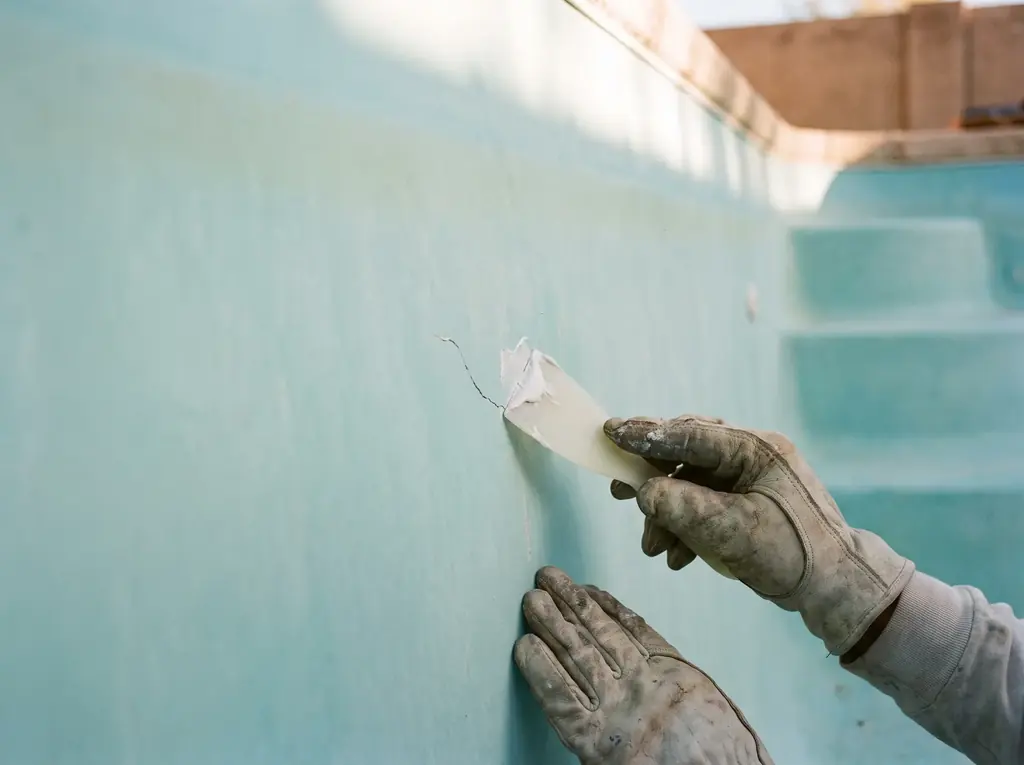
Spider cracks, blisters, leaks, fittings and steps repaired by technicians who work on fiberglass and nothing else.
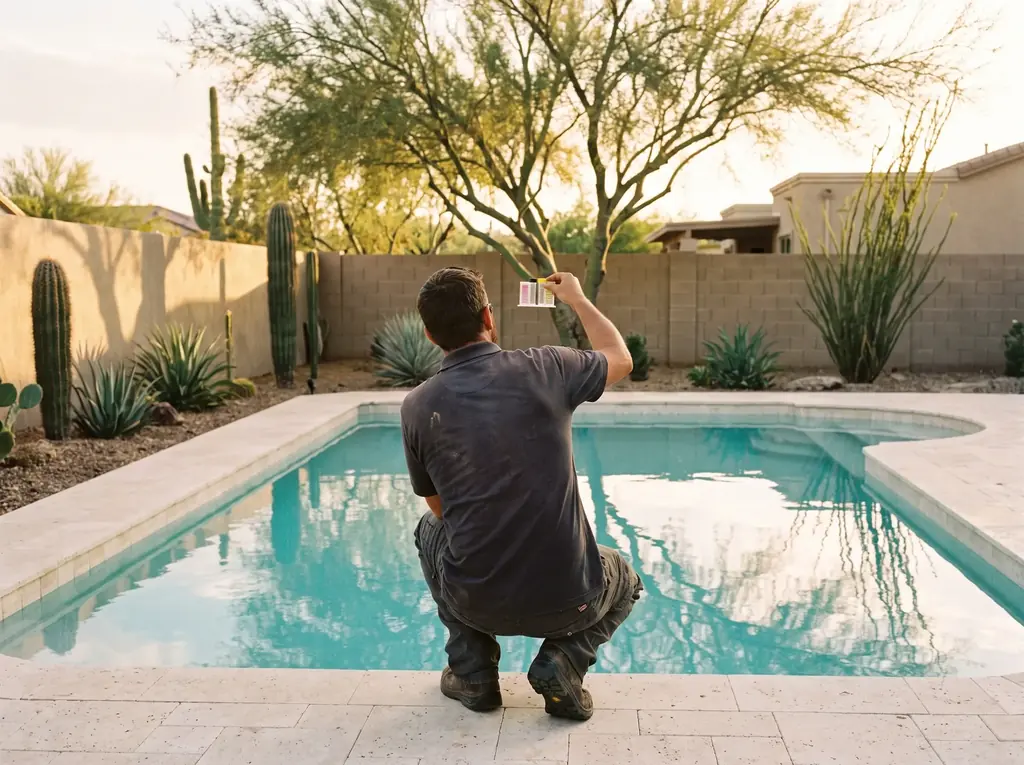
Weekly service with water balanced for gelcoat, soft brush cleaning, equipment checks, start-ups and monsoon cleanups.
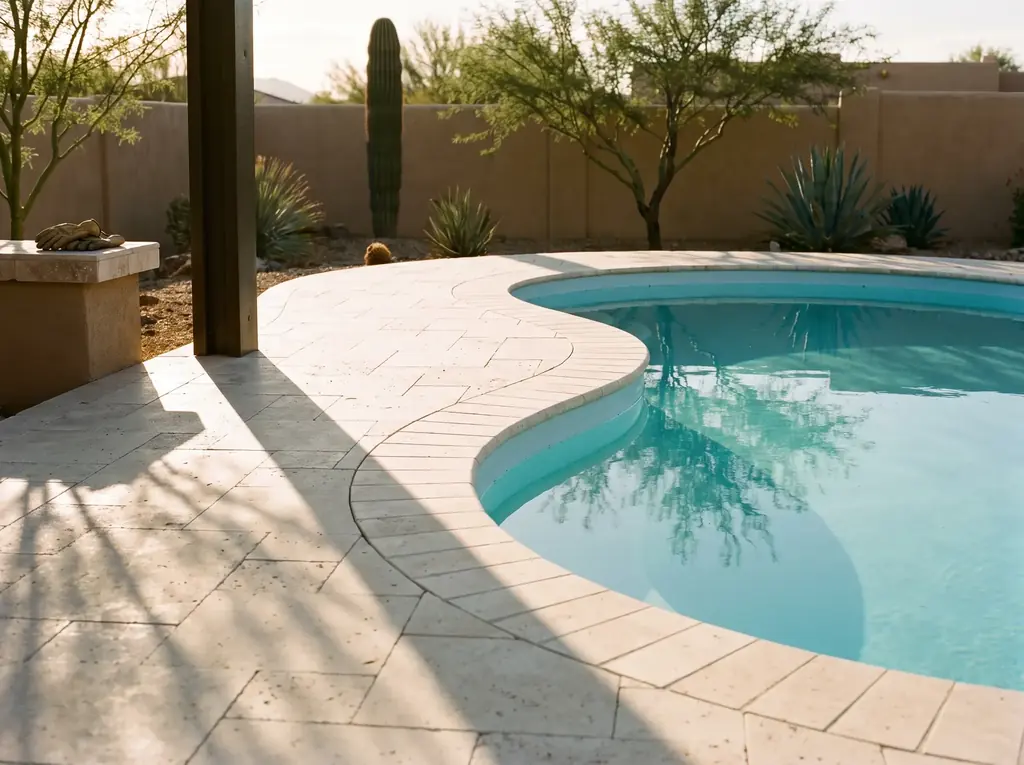
Coping tied properly into the shell and decks in surfaces that stay walkable in July, sloped so monsoon water drains away.
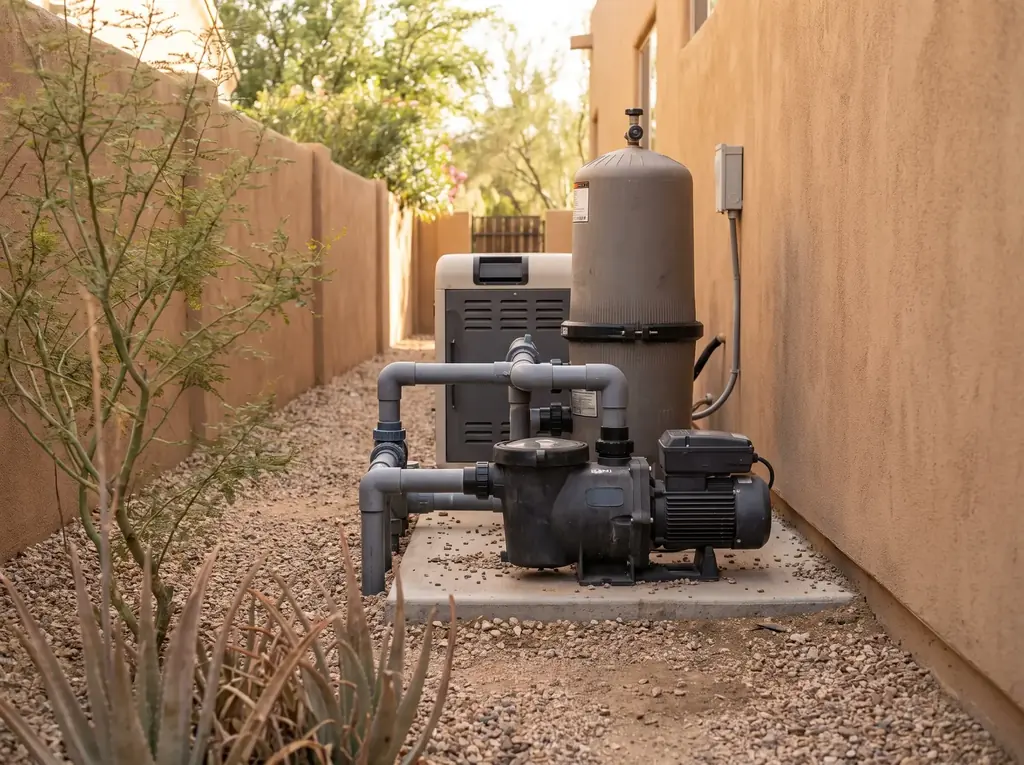
Variable speed pumps, filters, heaters and heat pumps, salt systems and automation sized to the shell, new or replacement.
Tell us what the finish looks like and how long it has looked that way. Photos help. We will come out, identify the stains and tell you the least invasive way to fix them.
We will call you to set up a free visit. If it is urgent, call (520) 555-0127.
Nothing was sent. Please call (520) 555-0127 and we will set up your free visit.