Caring for a Fiberglass Pool in the Arizona Heat
- Fiberglass pools only, installed and serviced
- Permit and HOA paperwork handled
- Crane access and caliche checked before you sign
- Written, itemized quotes
Fiberglass pool maintenance in Tucson comes down to four habits: keep the water balanced for gelcoat, clean with soft tools only, run the pump longer when it is hot, and keep the water level up against evaporation. Do those every week and a fiberglass pool is about as easy to own as a pool gets.
The fifth rule is the one that matters most: never drain a fiberglass pool without a professional. Everything else on this list is about keeping it looking good. That one is about keeping it in the ground.
Balance the water for gelcoat, not for plaster
Gelcoat is smooth and non-porous, which is why algae and calcium have a hard time sticking to it. It is also why the water chemistry is a little different from what a plaster pool needs. Plaster pools are often run with extra calcium to protect the plaster. Fiberglass does not need that, and too much calcium in Tucson’s hard water is exactly what leaves scale on the waterline.
Keep pH, alkalinity and calcium hardness in the ranges your shell maker specifies, and test at least weekly in summer. Low pH can dull and etch gelcoat over time. High calcium and high pH together throw scale. Metals from fill water or from some algaecides can stain. If a service company treats your pool like plaster, this is where it shows first.
Soft tools only
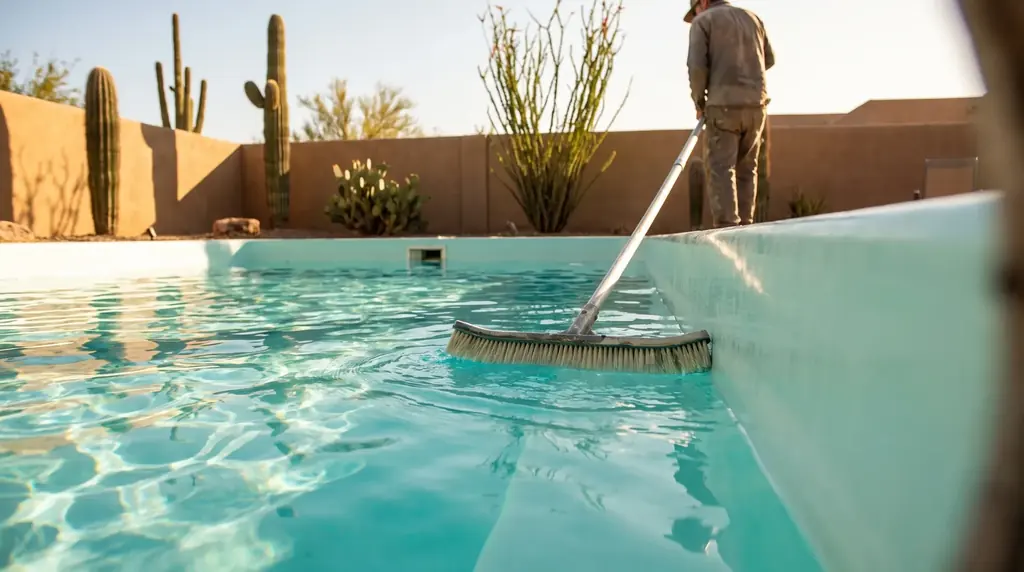
Brush with a nylon brush, never a stainless steel one. Skim the surface and empty the baskets. Choose a robotic or suction cleaner sold as safe for fiberglass, with soft treads or brushes.
Never use anything abrasive on gelcoat. That means no wire brushes, no pumice stones, no scouring pads and no melamine sponges such as a magic eraser. They all remove a little of the glossy surface each time, and a dulled surface holds stains and algae more easily than the original finish. No acid washing either. That is a plaster treatment and it damages gelcoat.
Summer pump runs and the heat
In triple digit heat the water warms up, chlorine burns off faster in the sun and algae grows quicker. Most pools need noticeably more filtration time in summer than in winter. A variable speed pump makes that affordable, because it can run long hours at low speed for a fraction of the power an older single speed pump uses.
Check chlorine more often from May through September, keep the skimmer clear, and shock after heavy use or a hot spell. If the water starts to look dull or green at the edges, act that day. In July, a small bloom becomes a big one fast.
Monsoon season cleanups
A monsoon storm can drop dust, leaves, mesquite pods and palo verde debris into the pool in minutes, then dilute the chemistry with rain on top of it. After a storm:
- Skim and empty the baskets before the debris sinks
- Brush the walls and steps with a soft brush
- Test and rebalance, then shock if the water is cloudy
- Check the water level, since heavy rain can overfill and a dust storm can coat the filter
Leaves left on the floor in summer heat are the most common source of brown organic stains on gelcoat. Getting them out quickly saves a stain treatment later.
Evaporation, covers and top-offs
Dry desert air pulls water out of a pool fast, especially in May and June when it is hot and the humidity is low. Keep the water at the middle of the skimmer opening so the pump never runs dry.
A cover is the single best way to cut evaporation, and it keeps dust and debris out between storms. Every top-off adds more hard water and more calcium, which is part of why Tucson pools get a calcium line. Less evaporation means fewer top-offs and less scale.
Never drain a fiberglass pool without a pro
A full pool holds its shape partly because the water inside pushes back against the soil and any groundwater outside. Empty it and that balance is gone. An empty fiberglass shell can shift, bulge or even lift out of the ground, particularly after a monsoon soaks the soil around it.
If the water needs changing because of high calcium or dissolved solids, it can be done, but it needs a plan: how much water comes out, how fast, what the ground conditions are, and how quickly it refills. Call us before you open a drain valve.
Fiberglass pool care questions
How often should a pool guy come out?
Weekly is the standard in Tucson, and in summer and monsoon season it is the minimum that keeps chemistry and debris under control. In the cooler months some owners stretch it, but water should still be tested weekly.
Can I use a magic eraser on a fiberglass pool?
No. A melamine sponge is a fine abrasive, and it wears away the glossy gelcoat surface a little at a time. A dulled surface stains and grows algae more easily. Use a soft cloth or nylon brush with a cleaner made for fiberglass.
What type of pool cleaner is best for a fiberglass pool?
A robotic or suction cleaner sold as fiberglass safe, with soft treads or brushes. For hand cleaning, a nylon brush. Avoid stainless steel brushes and anything with a scouring surface.
What does pool maintenance include?
Weekly testing and balancing, skimming, brushing, emptying the baskets, checking the pump and filter, and cleaning or backwashing the filter as needed. In Tucson add monsoon cleanups and topping off for evaporation.
Will my pool pop out of the ground if I drain it?
It can. An empty fiberglass shell loses the water pressure that holds it against the soil, and groundwater or saturated ground after a storm can push it up or shift it. Never fully drain a fiberglass pool without a professional plan.
Want gelcoat-safe service every week?
Tell us about your pool and what it needs. We will come out, test the water, look at the finish and the equipment, and give you a straight plan.
- Call(520) 555-0127
- Emailinfo@tucsonfiberglasspools.com
- HoursMon to Fri, 7am to 5pm. Saturday by appointment.
Thanks, we have your request
We will call you to set up a free visit. If it is urgent, call (520) 555-0127.
Online requests are not switched on yet
Nothing was sent. Please call (520) 555-0127 and we will set up your free visit.