Less for the sanitizer to fight
Gelcoat is smooth and non-porous, so algae has a hard time getting a hold. That typically means less chlorine demand, which lets a salt cell or chlorinator run at a lower output and last longer.
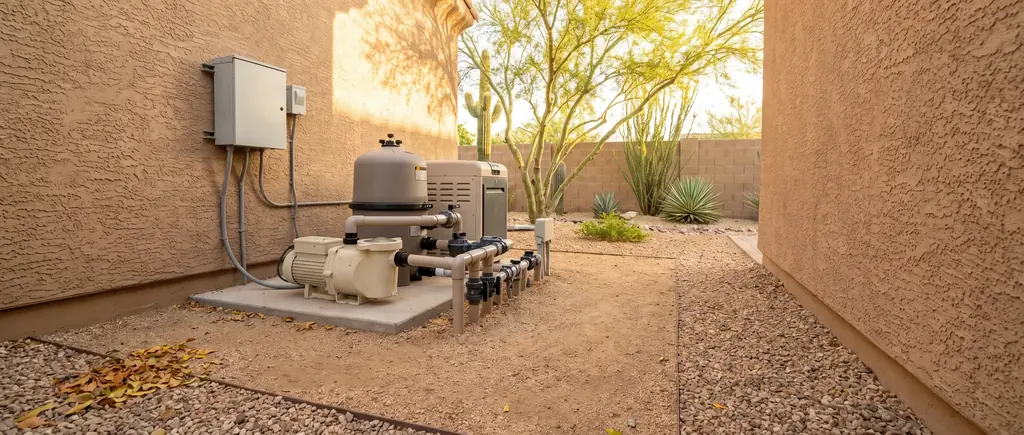
Pumps, filters, heaters, salt systems and controls sized to your fiberglass shell, set on a pad that drains, and built to cope with a Tucson summer.
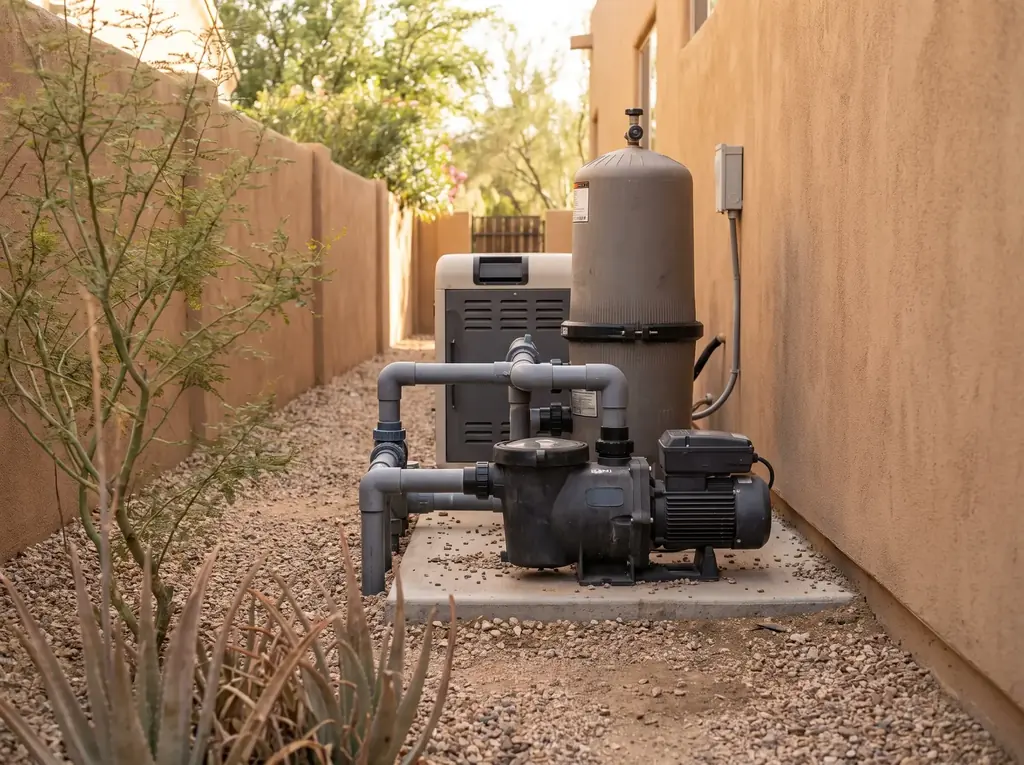
The pool gets the photos, but the equipment pad beside the house does the daily work. It moves every gallon through the filter, keeps the chlorine where it should be, heats the spa on a January night and decides how big your power bill is in August.
In Tucson that pad has a hard life. It sits in full sun at 110 degrees, it breathes monsoon dust, and it runs on water loaded with calcium that scales up heaters and salt cells from the inside. A pump that would last years in a mild climate can be running at the edge of its rating here, and a heater that was never descaled loses efficiency every season.
We fit equipment for fiberglass pools only, on new installs and on pools that are already in the ground, including ones we did not build. We size it to the shell's actual volume, set it up for how you swim, and lay the pad out so it is easy to service and drains when the storms come through.
What we do not do is sell equipment over the counter or work on concrete or vinyl pools. Every piece we fit is installed, programmed and started up by us.
The shell you own changes what the equipment has to do. Fiberglass usually asks less of it, which is good news for both the power bill and the parts.
Gelcoat is smooth and non-porous, so algae has a hard time getting a hold. That typically means less chlorine demand, which lets a salt cell or chlorinator run at a lower output and last longer.
Fiberglass walls conduct heat less than concrete, so a heated pool or spa tends to hold temperature better on cool spring and fall nights. The heater or heat pump runs shorter cycles to get the same swim.
A new plaster pool sheds fine dust for weeks and loads up filters while it cures. A fiberglass shell has no plaster to cure, so new equipment starts clean.
Every shell is built from a mold with a published size, so the gallons are known rather than estimated. That lets us size the pump, filter and heater to the pool instead of guessing.
The full pad for a new fiberglass pool or pool and spa: pump, filter, heater or heat pump, sanitizer, automation and lighting, laid out and plumbed as one system.
A failed pump or a tired heater replaced with one sized to your shell, including the plumbing changes the new unit needs. We also diagnose pump problems first, because a noisy or weak pump is not always a dead one.
Moving from a single speed pump to variable speed, adding a salt system or heat pump, or adding controls so you can run the pool and spa from your phone.
We work from the shell's volume, the plumbing run to the pad, any spa or water features, and how you actually use the pool, then size each piece to fit together.
A level pad with room to open lids and pull filters, kept off low spots so monsoon runoff does not pool around the motors, and clear of where the AC condenser blows hot air.
Plumbing run and pressure tested, valves labeled, and electrical and bonding work done to code by a qualified electrician where the job requires one.
Pump speeds and run times set for summer and winter, heater and salt output set, automation schedules built, and a walkthrough of what each switch and setting does.
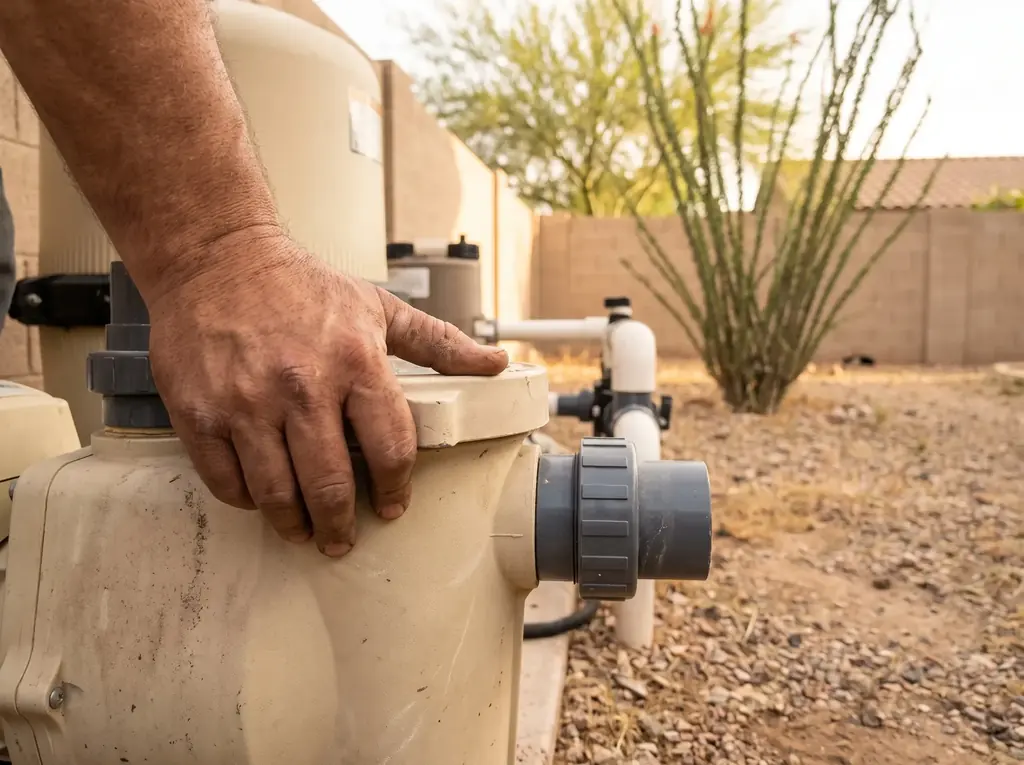
We check the shell, the existing equipment, the plumbing, the electrical supply and how the pad sits in the yard. About an hour.
If something has failed, we find out what and why. A tripping breaker, a scaled heater or a clogged impeller each points to a different fix.
You get a written quote with the options laid out side by side, for example repair versus replace, or a gas heater versus a heat pump, with the trade offs explained.
We set the equipment, run and pressure test the plumbing, and complete electrical and bonding work.
We bring everything online, check flow and pressure, and program speeds, schedules, heat and salt output for the season.
We show you how it runs and what to watch for. If you are on our service plan, the same team checks the pad on every visit.
We only work on fiberglass pools, so we set equipment up for gelcoat, not plaster. That shows up in the details: salt output and water balance kept where the shell's manufacturer wants them, and no start-up routines designed for curing plaster.
We size from the pool, not from what is on the truck. A pump that is too big wastes power and moves water faster than the filter likes. A heater that is too small never catches up on a cold night. Getting the sizes right up front is cheaper than fixing them later.
And we plan for this climate. Hard water scale inside heaters and salt cells, summer run times and monsoon dust in the filters are part of every recommendation we make.
Send us a photo of your equipment pad and the labels on the pump and heater. We will tell you what we see and set up a visit.
We have not collected any reviews yet. When we do, they will appear here in full.
For most Tucson owners, yes, if you want to swim outside June to September or use a spa in winter. Our nights cool off fast in spring and fall, and a heater turns those months into swimming months. Pair it with a cover, because a heated pool in dry desert air loses heat and water quickly overnight.
Generally, yes. A heat pump pulls heat from the air, and Tucson's spring and fall afternoons give it plenty to work with. It is slower and less efficient on the coldest winter nights, which is why spa owners who want fast heat often choose gas. We help you pick based on how you swim.
The pump is usually the biggest part of it, because it runs every day, and in summer it runs longer. A variable speed pump set to run slow and long typically uses far less power than an old single speed pump moving the same water. Heat pumps and automation add to the total depending on how you use them. We can look at your current setup and tell you where the power is going.
A salt pool is still a chlorine pool. The salt system makes chlorine from dissolved salt instead of you adding it by hand. Both work well on fiberglass when the water is balanced and the system is set up the way the shell's manufacturer recommends. Salt gives steadier chlorine with less handling. Its cell needs regular descaling in Tucson's hard water.
Sunlight is the big one, and Tucson has plenty of it. Heat, swimmers, dust and organic debris from monsoon storms all use up chlorine too. A properly sized sanitizer, stabilizer kept in range and a pump that runs long enough to circulate the water are what keep up with it.
With the equipment running and the water balanced, pool water can stay in for years. What it cannot do is sit still. Without circulation and filtration, Tucson heat turns it green within days, which is why a failed pump in summer is worth calling about the same day.
We fit and service pool equipment across Tucson, Oro Valley, Marana, Catalina Foothills, Casas Adobes, Dove Mountain, Tanque Verde, Vail, Rita Ranch, Sahuarita, Green Valley and SaddleBrooke.
Areas we serve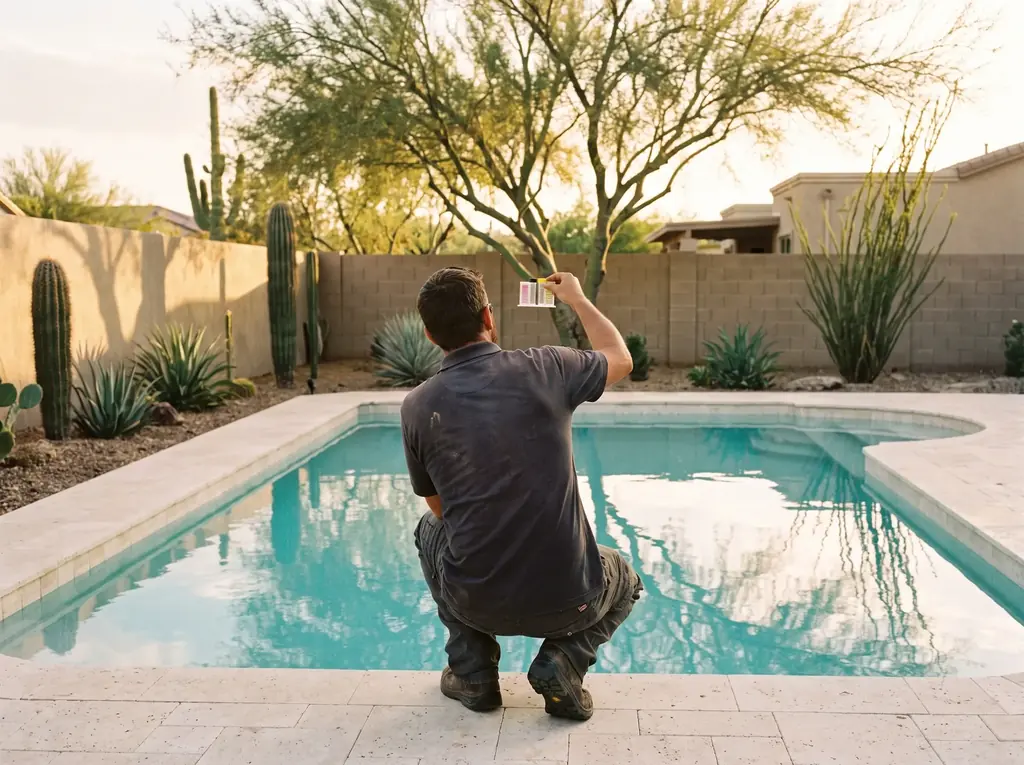
Weekly service with water balanced for gelcoat, soft brush cleaning, equipment checks, start-ups and monsoon cleanups.
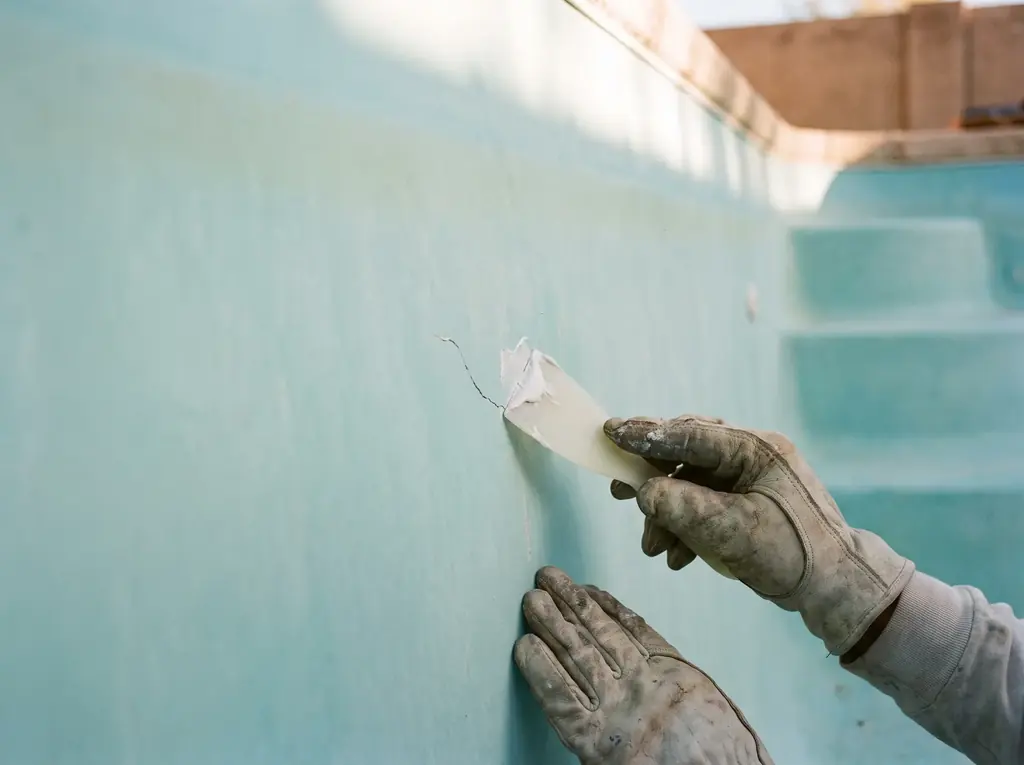
Spider cracks, blisters, leaks, fittings and steps repaired by technicians who work on fiberglass and nothing else.
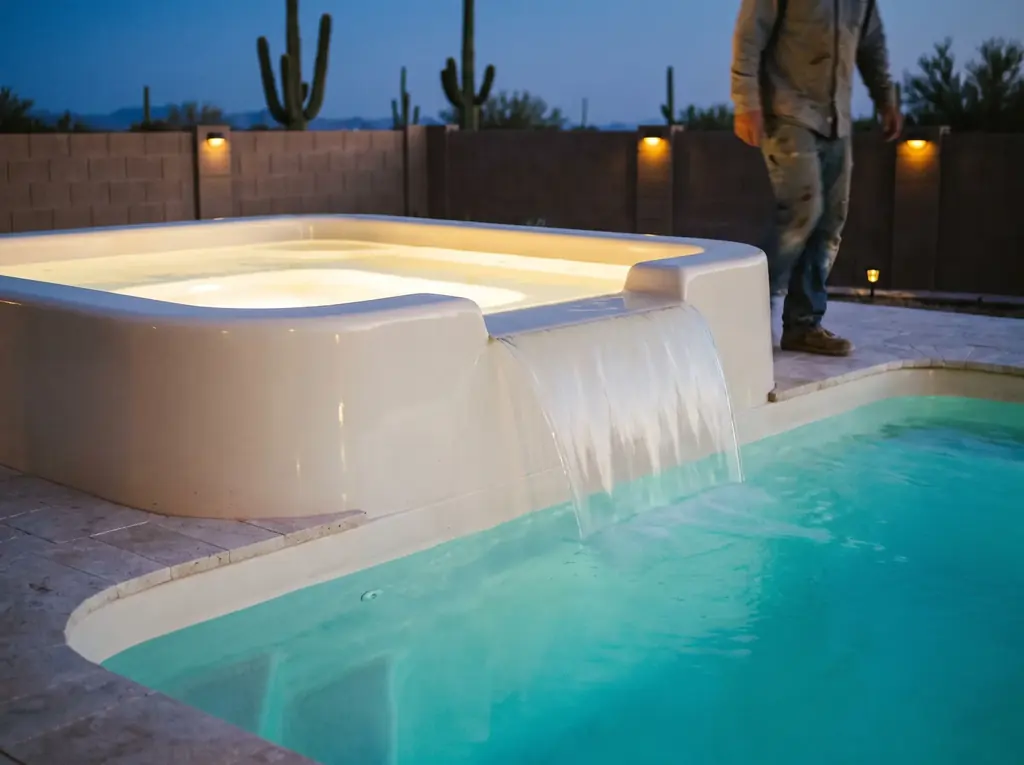
Matching fiberglass spas that spill into the pool, heated for winter soaking and set up to run from your phone.
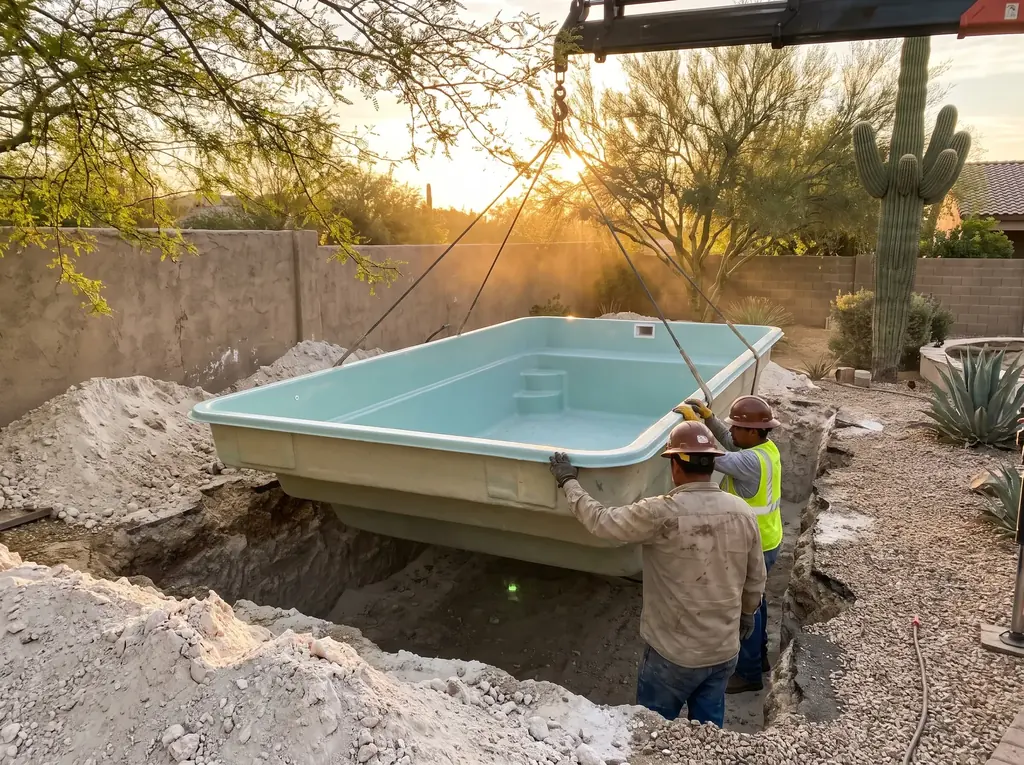
Complete inground fiberglass pools: site check, permit, excavation through caliche, a leveled base, crane set, plumbing, backfill and start-up.
Tell us what you have and what it is doing, or what you would like to add. We will come out, check the pad and give you written options.
We will call you to set up a free visit. If it is urgent, call (520) 555-0127.
Nothing was sent. Please call (520) 555-0127 and we will set up your free visit.