A clean, level edge to build on
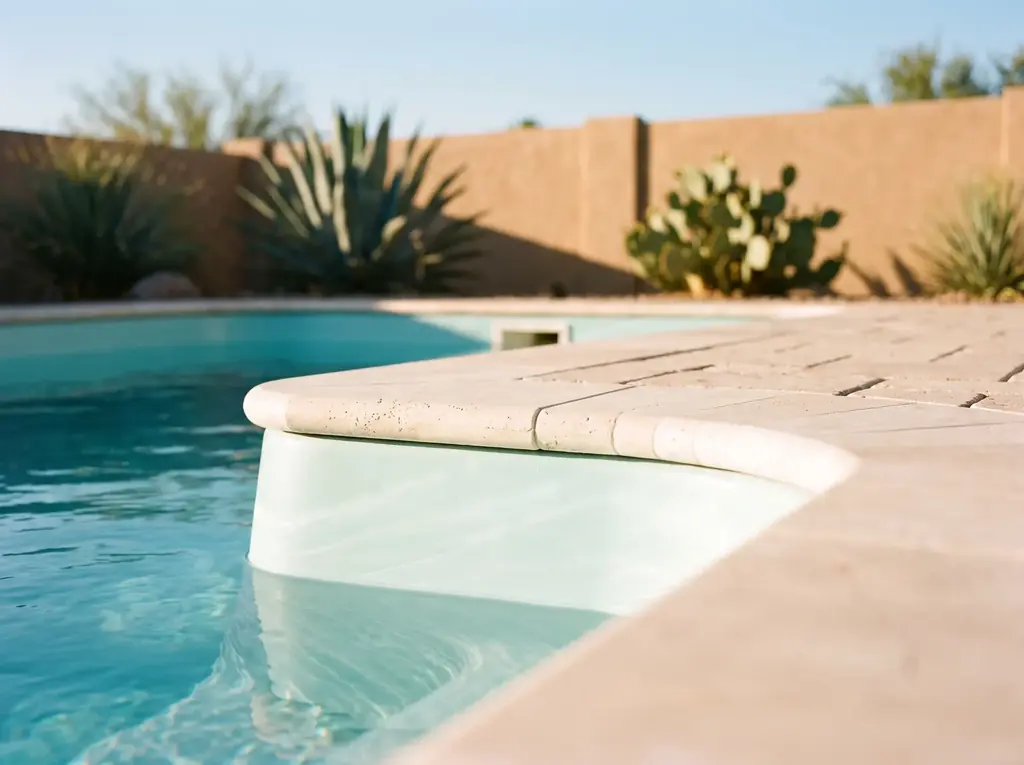
The top lip of a fiberglass shell is made in a factory, so it is consistent all the way around. That gives the coping a true line to follow and makes a crisp, even edge easier to achieve.
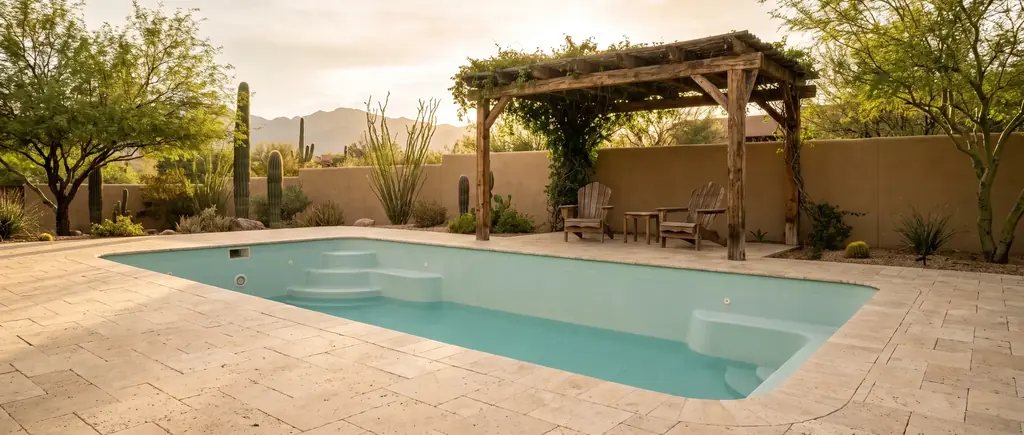
Coping tied properly into the fiberglass shell, deck surfaces you can walk on barefoot in July, and slopes that send monsoon water away from the pool and the house.
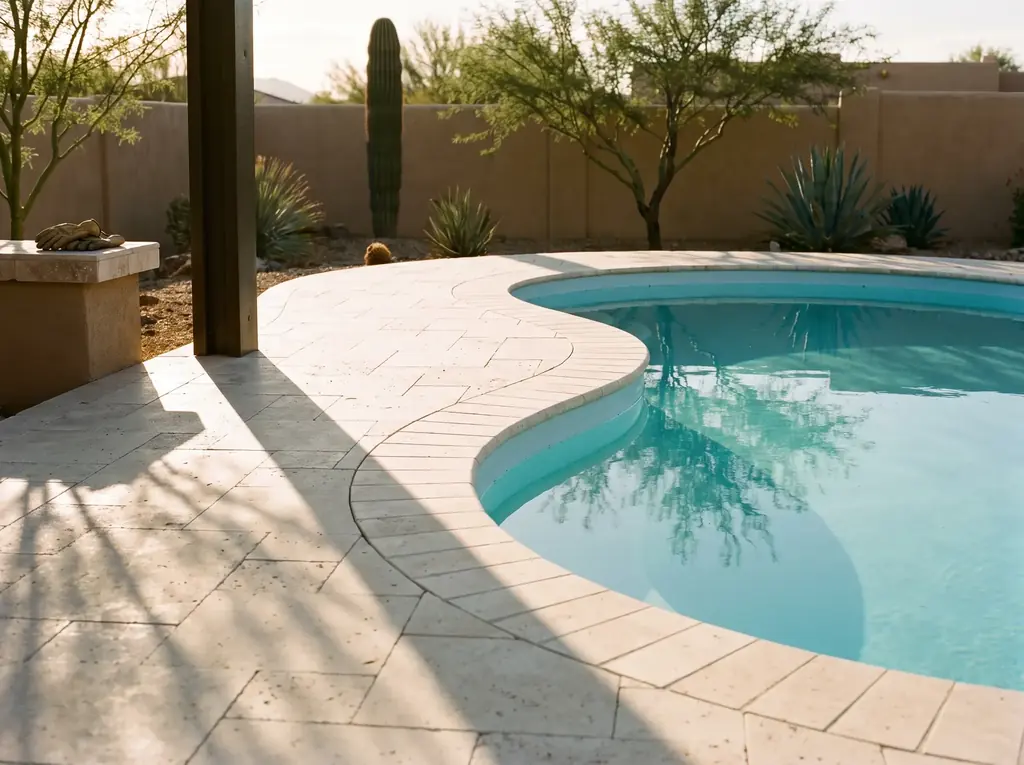
You notice the deck before you ever touch the water. It is what you cross barefoot at three in the afternoon, what the chairs sit on, and what catches every splash and every monsoon downpour. A great shell with a scorching, cracked or badly sloped deck is still an unpleasant pool to own.
The coping is the edge between the two: the cap that runs around the top of the pool, where you sit with your feet in the water and grab on at the end of a lap. On a fiberglass pool the coping does a structural job as well as a visual one. It caps the top lip of the shell and, typically with a concrete beam poured around the top of the walls, locks that lip in place. Done properly, the shell and the deck can each move a little with the ground without fighting each other.
We build decks and coping as part of every pool we install, and we rebuild them around fiberglass pools that are already in the ground. If your current deck is cracked, too hot, holding water or pulling away from the coping, that is work we do on its own.
A fiberglass shell and a well built deck suit each other in desert conditions. Here is why.
The top lip of a fiberglass shell is made in a factory, so it is consistent all the way around. That gives the coping a true line to follow and makes a crisp, even edge easier to achieve.
A one-piece shell has a little flex, and Tucson clay swells in the monsoon. With an expansion joint between coping and deck, the two can move slightly without cracking each other.
Many fiberglass pools do without a band of waterline tile. Hard water calcium that collects at the waterline usually wipes off gelcoat, instead of crusting into grout and tile.
Because the shell goes in fast, the deck usually follows within the same project rather than waiting out a long concrete cure. You get a finished yard sooner.
Poured, bullnose concrete coping or stone and paver coping, set over the shell's top lip with the beam and joints a fiberglass pool needs, finished smooth enough to sit on.
Light colored, textured cool deck coatings, travertine and pavers, chosen for how hot they get in July, how they handle hard water splash, and what your HOA will approve.
Removal of a cracked, hot or badly sloped deck around a fiberglass pool, then new coping where needed and a new deck, with the shell protected and usually kept full throughout.
Deck size and shape, where shade and furniture go, the surface and color, and an HOA submittal where your community reviews materials and colors.
Coping set to the shell's top lip, typically on a concrete beam that ties the top of the pool walls in place, with the shell full of water so it holds its final shape.
A compacted base, the deck sloped away from the pool and the house, and deck drains or channels where a storm would otherwise pond water or wash dirt into the pool.
The finished surface laid or poured, expansion joints between coping and deck and across larger slabs, and sealing for stone and pavers to help with calcium and staining.
We look at the pool, the existing deck if there is one, how water runs off in a storm, and how the space is used. Then we talk through surfaces and colors.
You choose the surface, coping style and layout, and get an itemized quote with coping, deck area, drainage and any removal listed separately.
We prepare the HOA submittal where required and check with your jurisdiction whether the work needs a permit, so nothing stops partway.
On existing pools we remove the old deck and any failing coping with the shell protected and kept full, so the gelcoat and the shell's shape are not put at risk.
Coping and beam set to the shell, the base compacted, slopes set away from the pool and house, and drains placed where storms will need them.
The deck surface finished, joints cut or set, stone and pavers sealed, then a walkthrough of care, including how to rinse off monsoon dust and hard water spots.
We understand what sits under the coping. On a fiberglass pool the coping and the beam are part of how the shell is held in place, and getting them wrong shows up later as cracked coping, a gap at the edge, or a wall that has moved. We only work on fiberglass, so this is everyday work for us.
We plan for July and for August storms. Surface choice decides whether the deck is walkable barefoot in the afternoon, and slope decides whether a monsoon downpour runs off into the yard or carries dirt into the pool and water toward your foundation.
And we stay. If you need service, repair or gelcoat work later, the team that built the deck knows exactly how it meets the shell.
Send us a few photos of the pool and deck. We will come out, check the coping, the slope and the drainage, and give you an honest plan.
We have not collected any reviews yet. When we do, they will appear here in full.
Coping is the cap that runs around the top edge of the pool, between the water and the deck. It gives you a finished edge to sit on and hold, keeps splash out from behind the pool wall, and on a fiberglass pool it covers and helps lock the top lip of the shell. It is usually poured concrete, stone or pavers.
The deck and coping are a real share of any pool budget. The price depends on the deck area, the surface you choose, the coping style, drainage needs, and on existing pools how much old deck has to come out. Light colored cool deck, travertine and pavers each sit at a different point. We give an itemized quote after a free visit.
Usually the shell and the site work to get it in the ground: excavation, caliche removal, the crane and the base. Decking is often the next biggest item, and its cost scales with the area and the surface, which is why it is worth deciding early how much deck you actually need.
A well installed fiberglass pool with balanced water is typically still in service. The gelcoat may show some fading or chalking and can be refinished, and equipment will have been replaced along the way. Decks often age faster than the shell, so a new deck and coping is a common way to refresh an older fiberglass pool.
Not always, but often more than a yard wall. Arizona and local codes require pool barriers in many situations, and whether your existing wall counts depends on its gates, any doors from the house that open onto the pool, and your jurisdiction's rules. We plan the barrier with you whenever a deck changes the pool area.
It can. Groundwater and soil pressure can shift or lift an empty fiberglass shell, which is why a fiberglass pool should never be fully drained without a professional plan. Deck and coping replacement usually does not need the pool drained at all. We keep it full and work around it.
We build pool decks and coping across Tucson, Oro Valley, Marana, Catalina Foothills, Casas Adobes, Dove Mountain, Tanque Verde, Vail, Rita Ranch, Sahuarita, Green Valley and SaddleBrooke.
Areas we serve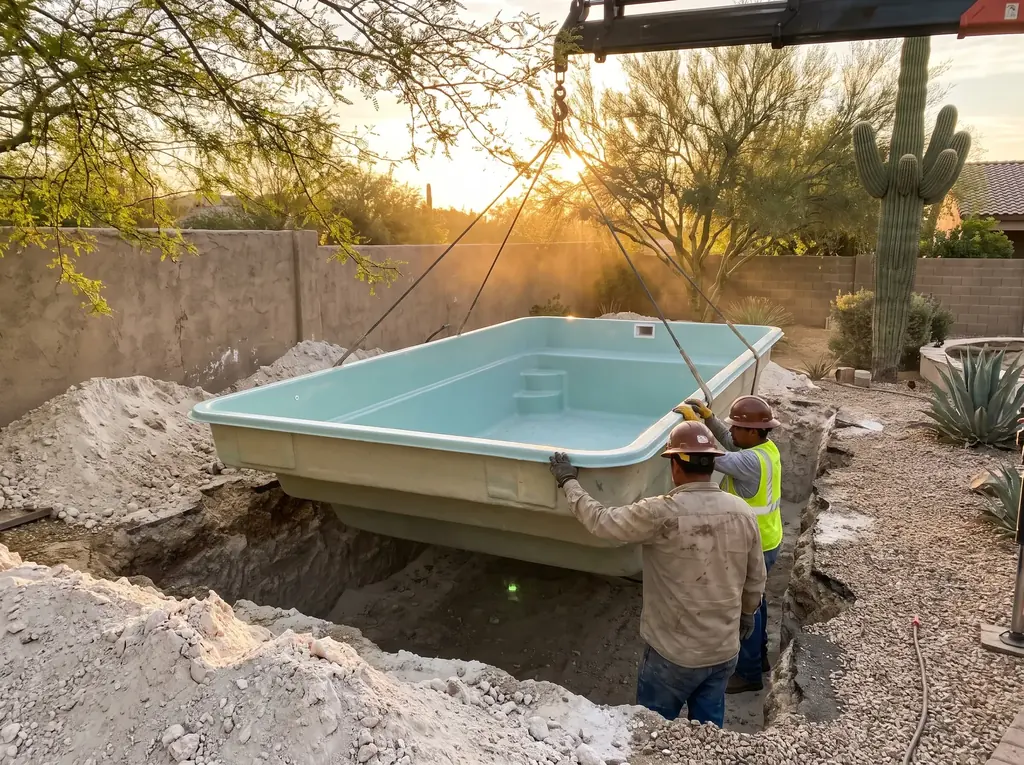
Complete inground fiberglass pools: site check, permit, excavation through caliche, a leveled base, crane set, plumbing, backfill and start-up.
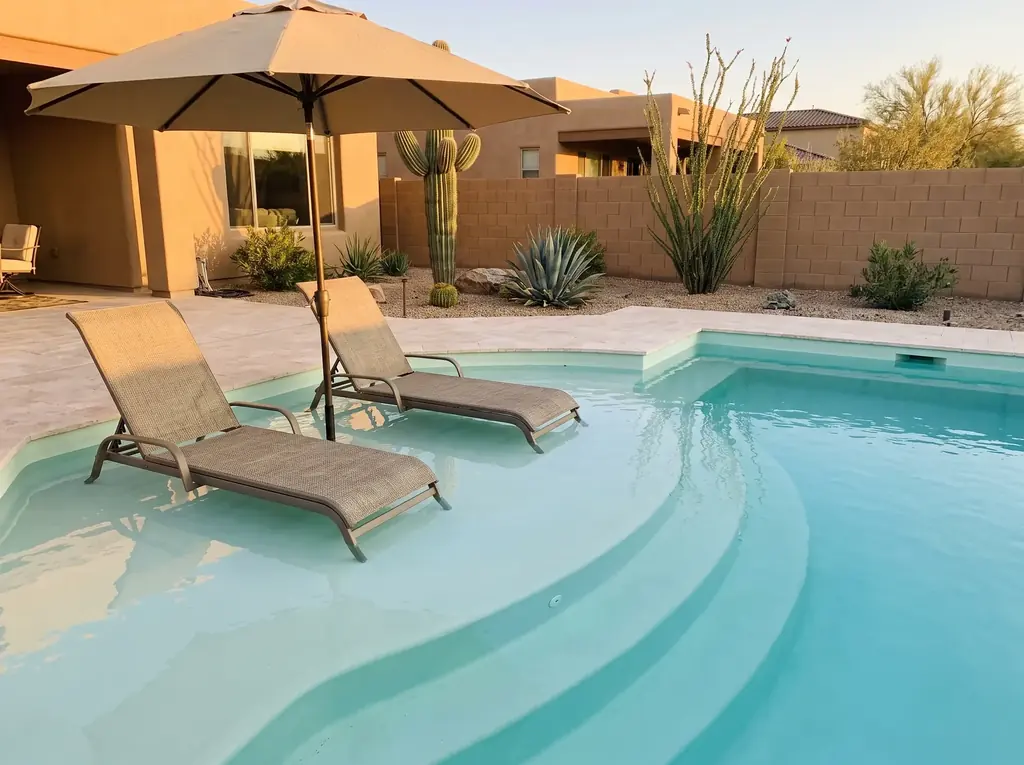
Sun shelves for loungers and small kids, plus bubblers, deck jets, sheer descents and lighting for desert evenings.
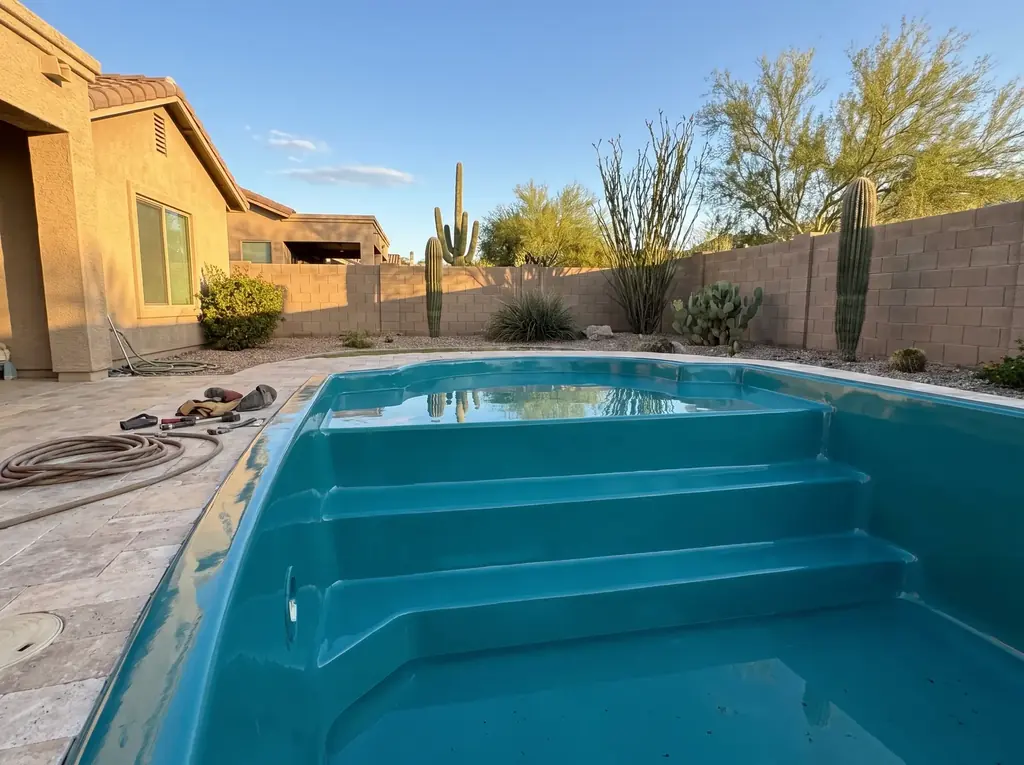
Calcium, metal and organic stains removed, chalky or faded gelcoat restored, and full refinishing for older shells.
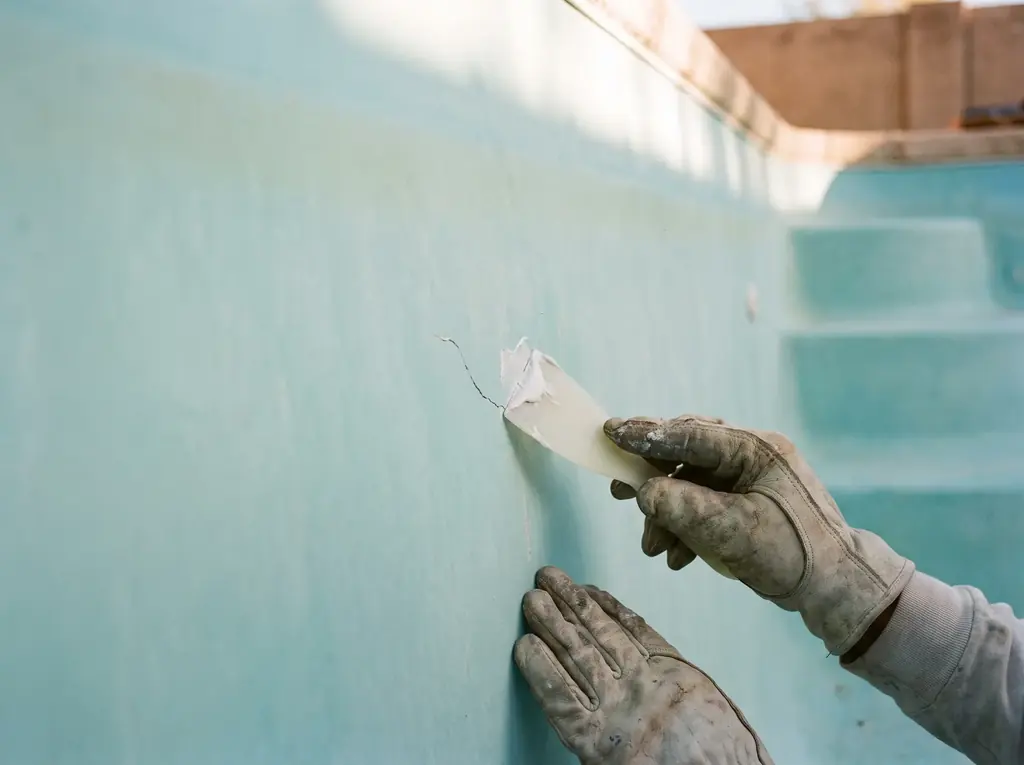
Spider cracks, blisters, leaks, fittings and steps repaired by technicians who work on fiberglass and nothing else.
Tell us whether you are planning a new pool or need a new deck around the fiberglass pool you have. We will come out and give you a written plan.
We will call you to set up a free visit. If it is urgent, call (520) 555-0127.
Nothing was sent. Please call (520) 555-0127 and we will set up your free visit.