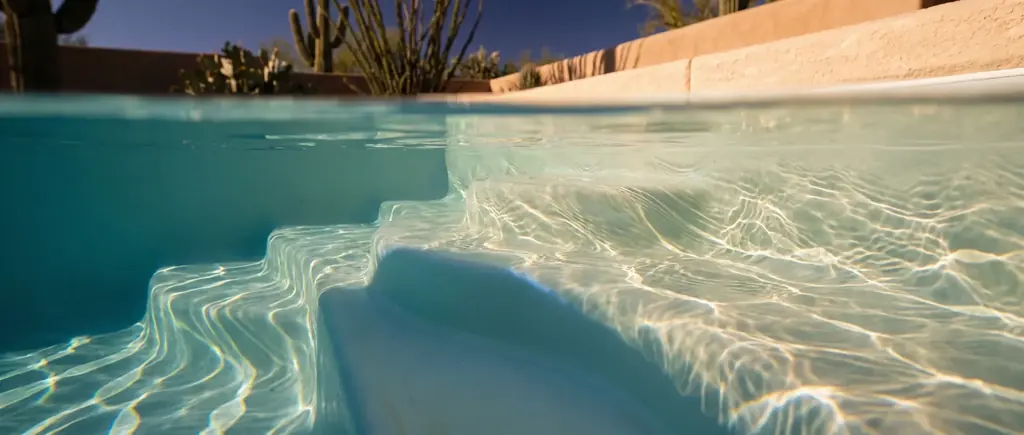
Smooth gelcoat steps of a fiberglass pool under clear water with sunlight patterns

Why Fiberglass Is the Right Pool for Tucson

Desert heat, hard water, monsoon dust and caliche all work against plaster pools. Here is how fiberglass holds up, where it falls short, and how to decide.

  • Fiberglass pools only, installed and serviced
  • Honest about when concrete is the better call
  • Permit and HOA paperwork handled
  • Written, itemized quotes

What makes a pool in Tucson different

A pool here lives a harder life than one in most of the country. The sun is strong for most of the year, summer water temperatures climb, and monsoon storms dump dust and debris into the water right when algae grows fastest. On top of that, our water is hard. It carries a lot of dissolved calcium, the same thing that leaves white crust on shower doors and tile lines.

Under the yard, a lot of Tucson properties have caliche, a cement-like layer of calcium carbonate, and some neighborhoods sit on clay that swells and shrinks with monsoon rain. Any pool has to be dug through that ground and then sit in it for decades.

The question is not which pool is best in general. It is which pool is best in these conditions, and for most Tucson back yards the answer is fiberglass.

How a fiberglass pool is built differently

A fiberglass pool is a single shell made in a factory: layers of fiberglass and resin with a smooth gelcoat finish on the inside. It arrives on a truck, gets lifted into a prepared hole by crane, and is leveled, plumbed and backfilled in place. Steps, benches and tanning ledges are molded into the shell.

A concrete pool, often called gunite or shotcrete, is built on site: dig, tie a steel rebar cage, spray concrete, let it cure for weeks, then finish the inside with plaster or a pebble finish. It can be any shape, which is its real strength. The trade is a porous, slightly rough interior and a long build.

That difference in the inside surface is what matters most in the desert. Plaster is porous. Gelcoat is not. Algae, calcium and dirt all have a much harder time getting a grip on gelcoat, and that one fact explains most of what follows.

Eight reasons fiberglass works in Tucson

Every one of these comes down to the conditions we live with here, not a generic sales pitch.

It resists algae through monsoon season

Algae needs somewhere to anchor. Porous plaster gives it millions of tiny footholds; gelcoat gives it very few. When summer water runs warm and a dust storm drops a layer of debris in the pool, a fiberglass pool is far less likely to turn green, and most owners use fewer chemicals and brush much less.
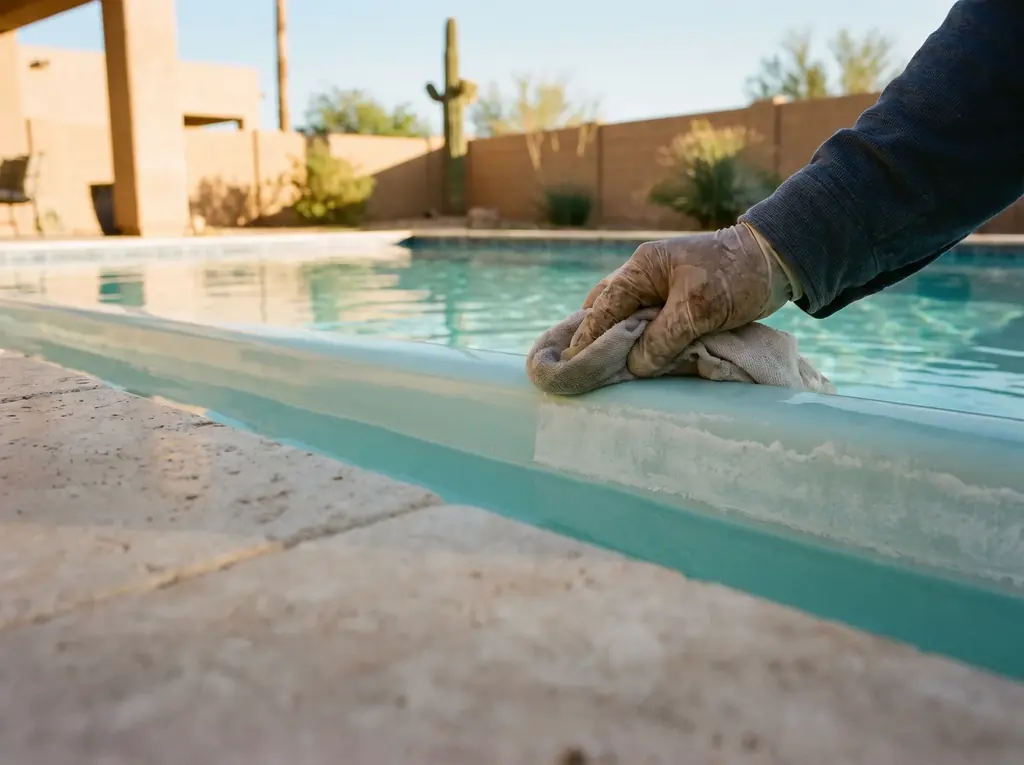
Hard water is easier on it

Tucson water leaves calcium behind as it evaporates, and our dry air evaporates a lot of it. On plaster and tile, that calcium builds into crusty scale and can etch the finish. On gelcoat, deposits sit on top of the surface and usually wipe off with a non-abrasive cleaner.

There is no replastering cycle

Concrete pools commonly need new plaster every 10 to 15 years, and heat and hard water tend to shorten that. Replastering means draining the pool and paying for a major project. A fiberglass pool is never replastered. With balanced water, the gelcoat finish typically lasts for decades.

It goes in weeks faster

Because the shell is built before it reaches your street, the install typically takes a few weeks once your permit is approved, not the months a concrete build often runs. Start planning in the fall or winter and you can be swimming before the May and June heat.

It tolerates shifting ground

A one-piece shell has a little flex. On expansive clay, or where caliche is broken over softer soil, that flex helps it ride out minor ground movement that can crack a rigid concrete shell. Caliche still has to be dug through for any pool, and we plan for it at the estimate.

It holds heat when nights turn cool

Fiberglass walls conduct heat less than concrete, so a heated pool or spa tends to hold its temperature better on cool spring and fall nights. That means less heater run time and a longer swim season on both ends.

It is comfortable to use

The smooth surface is gentle on feet, knees and swimsuits. Kids can sit on the molded steps and benches all afternoon without rough plaster scraping them.

It costs less to own

Less brushing, fewer chemicals, no acid washes and no replaster bill. The upfront price is often close to a comparable concrete pool; the savings build year after year.

Hand wiping white calcium residue off fiberglass pool gelcoat at the waterline

Fiberglass vs concrete vs vinyl, side by side

How the three main kinds of inground pool hold up to Tucson conditions.

Fiberglass vs concrete vs vinyl, side by side
FiberglassConcrete (gunite)Vinyl liner
Typical install timeOften several monthsSeveral weeks
SurfacePorous plaster, rough textureSmooth vinyl, can puncture
Algae resistanceLower, plaster gives algae a gripModerate
Hard water and scaleScale and etching are commonCan stain and fade the liner
Big recurring costReplaster every 10 to 15 yearsLiner replacement as it ages
Desert sun and heatPlaster wears faster in heatLiners fade and get brittle
Custom shapesAny shape or depthLimited

General comparisons. Your lot, your soil and your design choices affect timeline and cost, and we walk through yours at the estimate.

When concrete is the better call

We only build fiberglass, and we will still tell you when it is the wrong pool for you.

You want a shape no mold makes

Fiberglass shapes come from manufacturer molds. There is a wide range, but a pool shaped to follow a curving wall exactly, or a fully custom outline, is a concrete job.

You need it wider than a truck can carry

Shells travel by highway, so roughly 16 feet wide is a common upper limit. Most families never need more, but some designs do.

A crane cannot reach the yard

The shell is set by crane over the house or carried through a clear path. On some tight lots neither works. We check this at the estimate before anything else.

You want a deep diving end

Fiberglass pools are made for swimming, lounging and play, and deep diving wells are generally not available.

Questions about fiberglass pools

Which pool lasts longer, fiberglass or concrete?

Both can last for decades as structures. The difference is the finish. A concrete pool's plaster commonly needs replacing every 10 to 15 years, while a fiberglass pool's gelcoat is never replastered and typically lasts for decades with balanced water.

What is the downside of a fiberglass pool?

Shape, width and access. You choose from existing molds, widths top out around 16 feet, and the shell must reach the yard by crane or a clear path. Deep diving ends are generally not available.

What happens to a fiberglass pool after 25 years?

A well installed shell with balanced water is usually still sound. The gelcoat may show some fading or chalking with age and sun, and it can be restored or refinished rather than replaced.

Do fiberglass pools crack easily?

Not usually. The shell is designed to flex slightly. Cracks generally trace back to a poor base, poor backfill, or a pool drained without a plan, which is why install method and proper service matter.

How much more expensive is a fiberglass pool than a vinyl pool?

Fiberglass usually costs more upfront than vinyl. Over the years the gap narrows, because vinyl liners need replacing as they age and Tucson sun is hard on them, while fiberglass has no comparable recurring cost.

Find out if fiberglass fits your yard

Tell us about your yard and how you want to use the pool. We will come out, check access and the ground, and tell you honestly whether fiberglass is the right choice.

Your yard, your pool, or the problem you are seeing.

Free and no obligation. Prefer to talk? Call (520) 555-0127.