Resists algae through monsoon season
Gelcoat is smooth and non-porous, so algae has nowhere to anchor. That matters here, where summer heat and monsoon dust are perfect algae conditions. Most owners use fewer chemicals and brush far less.
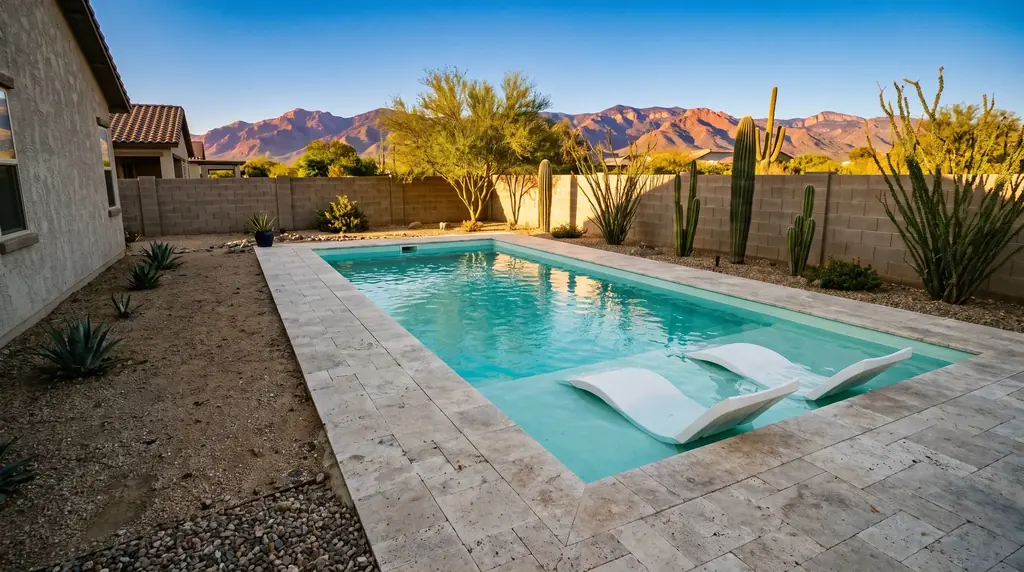
We install and service fiberglass pools and nothing else. A smooth shell that stays cleaner through monsoon season, shrugs off our hard water, never needs replastering, and goes in weeks faster than a concrete build.
Free on-site estimates across the Tucson metro
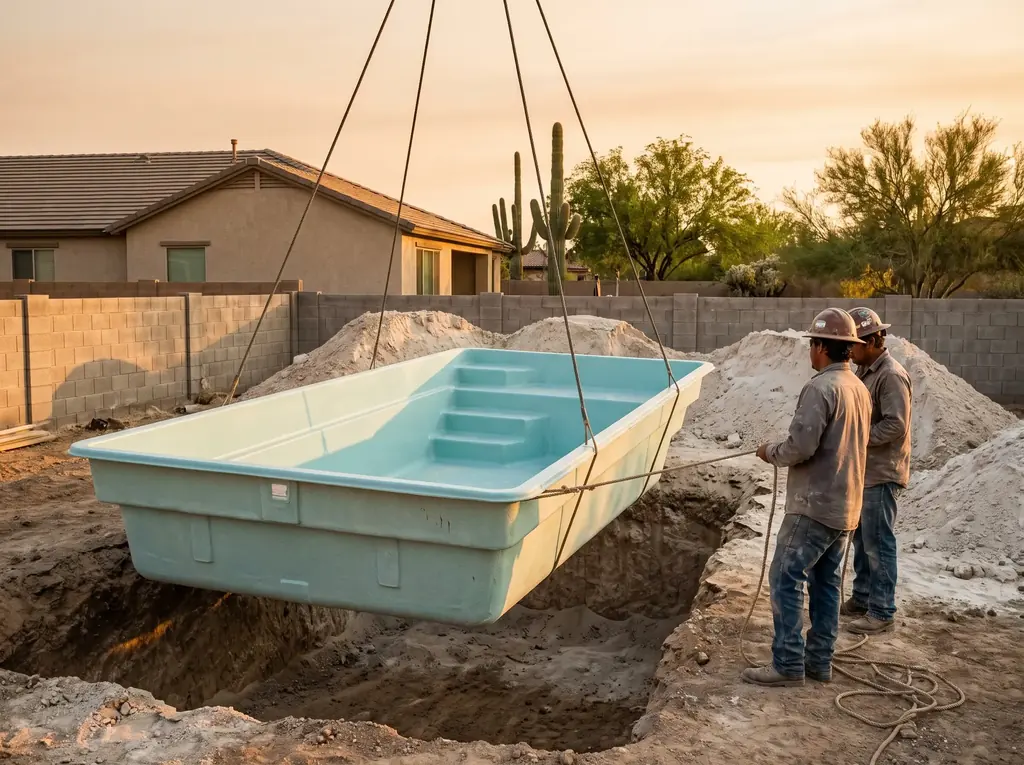
Most pool builders will sell you whatever you walk in asking for. We made a different call. After seeing what desert heat, monsoon dust and hard water do to plaster, we built the whole business around one-piece fiberglass pools.
A fiberglass pool is made in a factory, trucked to your street, lifted over the house by crane and set into a prepared hole. There is no rebar to tie, no concrete to shoot and cure for weeks, and no plaster to trowel on and replace later. The interior is a smooth gelcoat finish that algae, calcium and dirt have a hard time sticking to.
That focus is what you get from us. One team handles the site check, the permit, the dig, the crane, the deck, the equipment and the service visits for years after. When you call about your pool five years from now, you talk to the people who put it in.
Tucson is hard on pools. Triple digit summers, monsoon dust storms, hard water and caliche under the yard all work against plaster. Here is how fiberglass handles each one.
Gelcoat is smooth and non-porous, so algae has nowhere to anchor. That matters here, where summer heat and monsoon dust are perfect algae conditions. Most owners use fewer chemicals and brush far less.
Our water carries a lot of dissolved calcium. On plaster and tile it builds crusty scale and etches the finish. On fiberglass, deposits sit on the surface and usually wipe off with the right cleaner.
Concrete pools commonly need new plaster every 10 to 15 years, and desert heat tends to shorten that. A fiberglass pool is never replastered. With balanced water the finish typically lasts for decades.
Because the shell is built in a factory, installation typically takes a few weeks once your permit is approved. Start in the winter and you can be in the water before the May and June heat.
Plenty of Tucson yards sit on caliche or expansive clay. A one-piece shell has a little flex, which helps it ride out minor ground movement that can crack a rigid concrete shell.
Fiberglass walls conduct heat less than concrete, so a heated pool or spa holds its temperature better through chilly spring and fall nights. That stretches the swim season on both ends.
No rough plaster to scrape toes or snag suits. Kids can sit on the steps and benches all afternoon without coming out with raw spots.
Less brushing, fewer chemicals, no acid washes and no replaster bill down the road. The upfront price is often close to concrete. The savings show up year after year.
From a bare back yard to years of weekly service, we look after the whole life of a fiberglass pool.
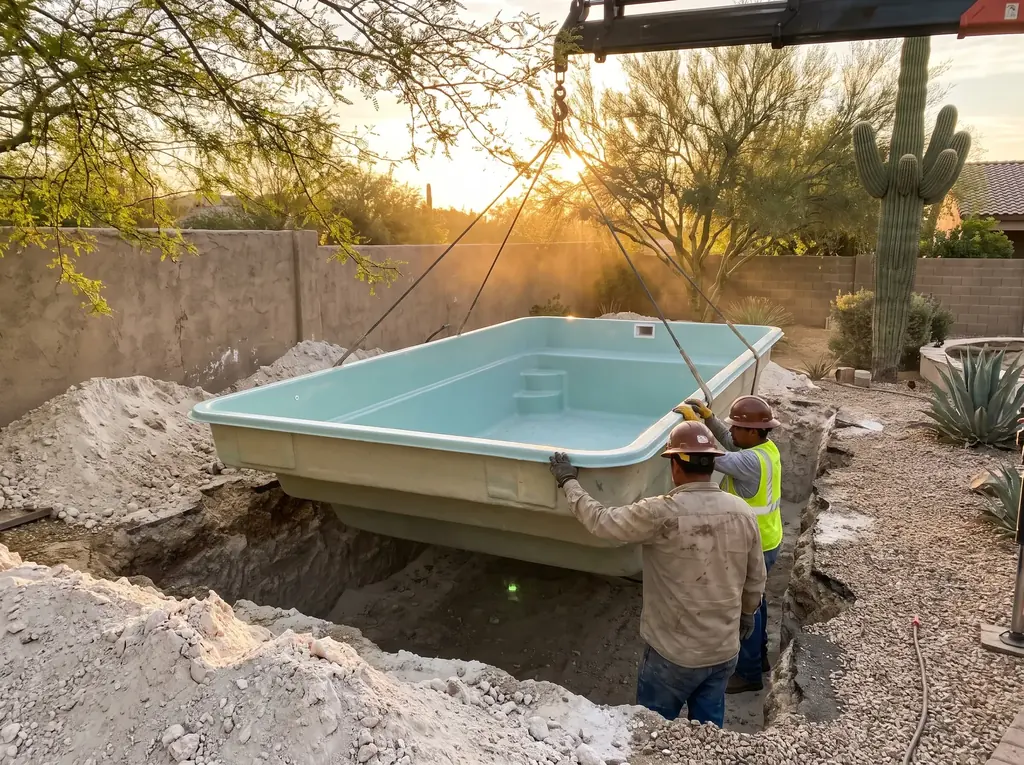
Complete inground fiberglass pools: site check, permit, excavation through caliche, a leveled base, crane set, plumbing, backfill and start-up.
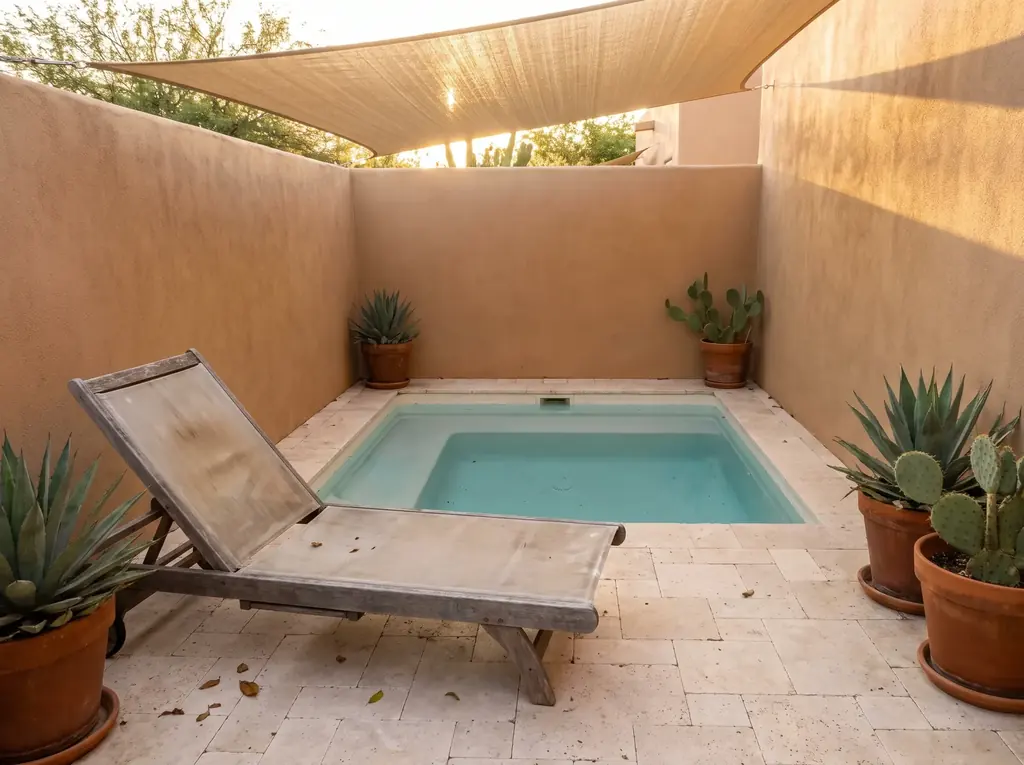
Compact shells for courtyards, patio homes and small lots. Less water to fill and treat, and a real place to cool off.
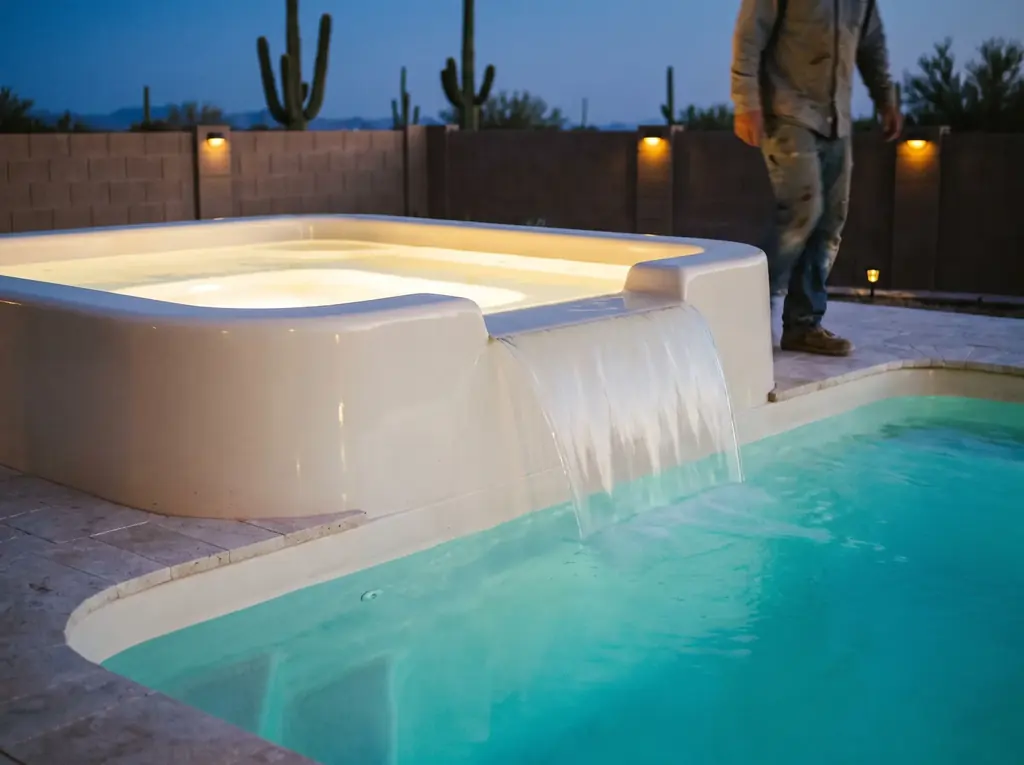
Matching fiberglass spas that spill into the pool, heated for winter soaking and set up to run from your phone.
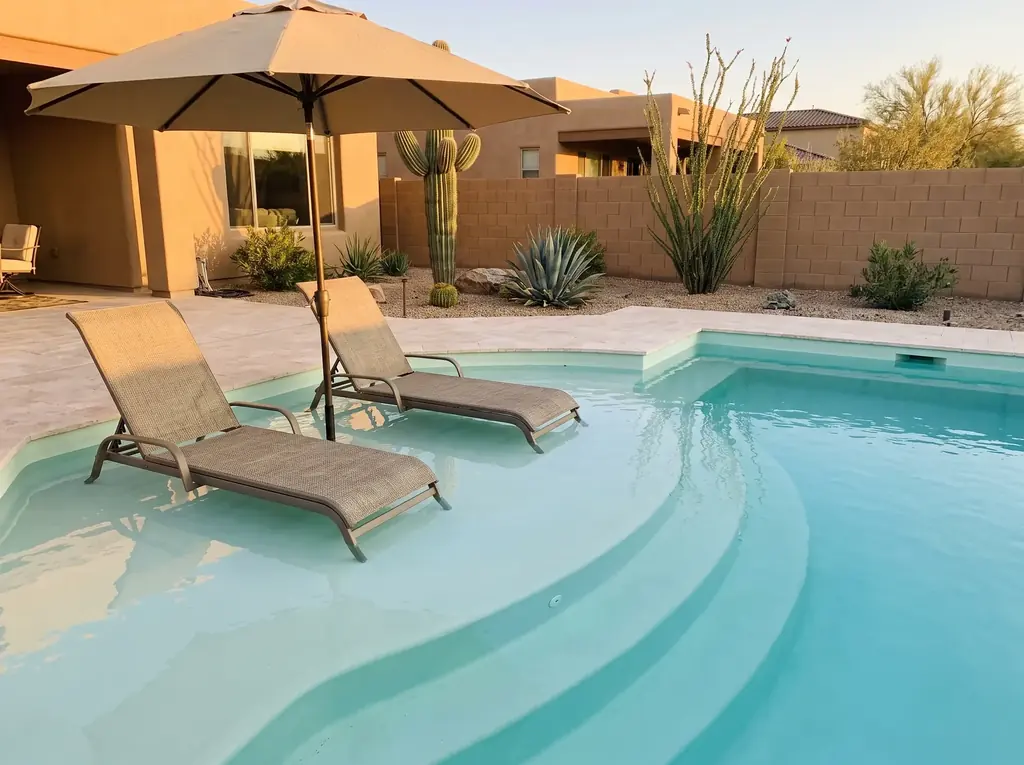
Sun shelves for loungers and small kids, plus bubblers, deck jets, sheer descents and lighting for desert evenings.
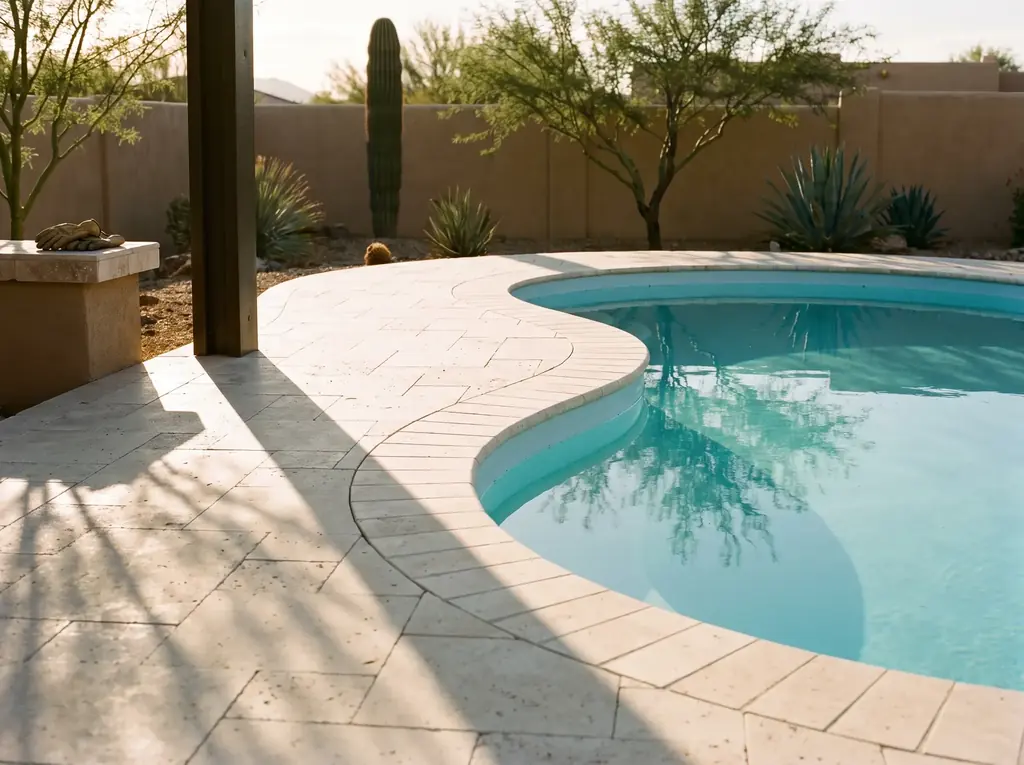
Coping tied properly into the shell and decks in surfaces that stay walkable in July, sloped so monsoon water drains away.
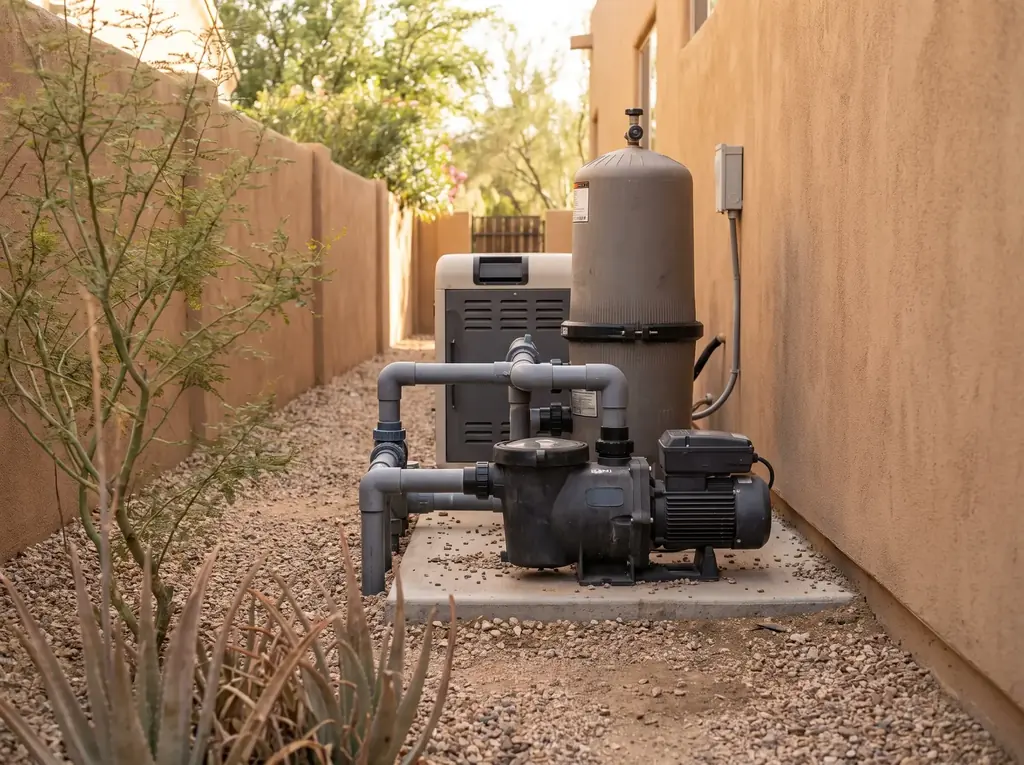
Variable speed pumps, filters, heaters and heat pumps, salt systems and automation sized to the shell, new or replacement.
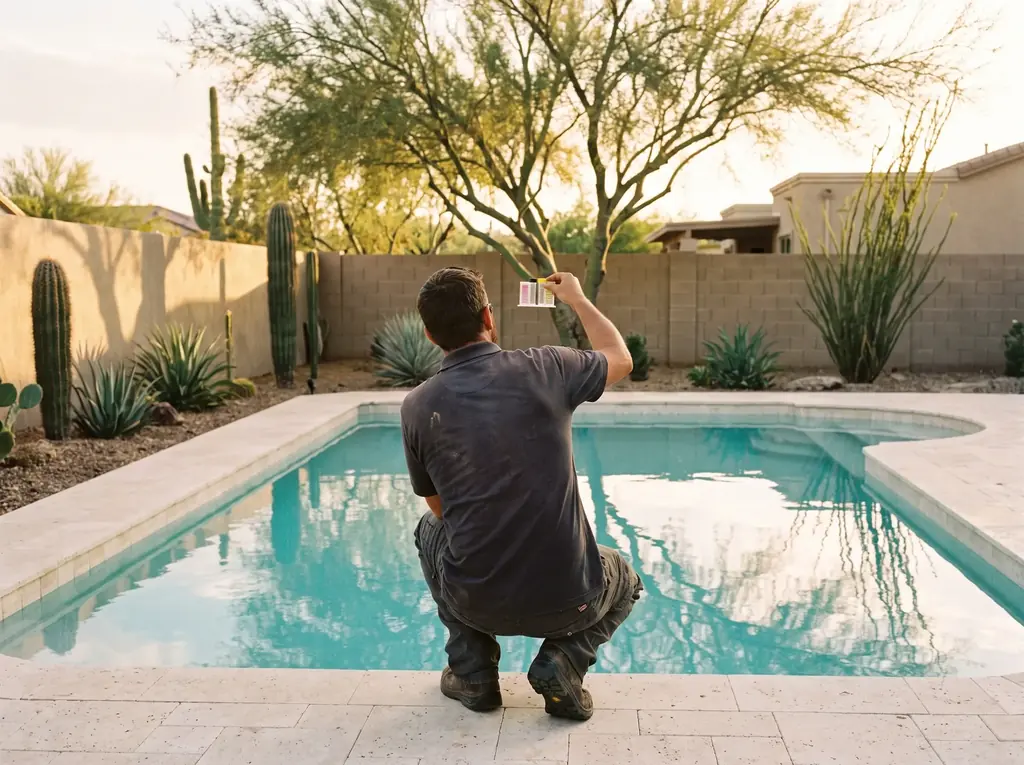
Weekly service with water balanced for gelcoat, soft brush cleaning, equipment checks, start-ups and monsoon cleanups.
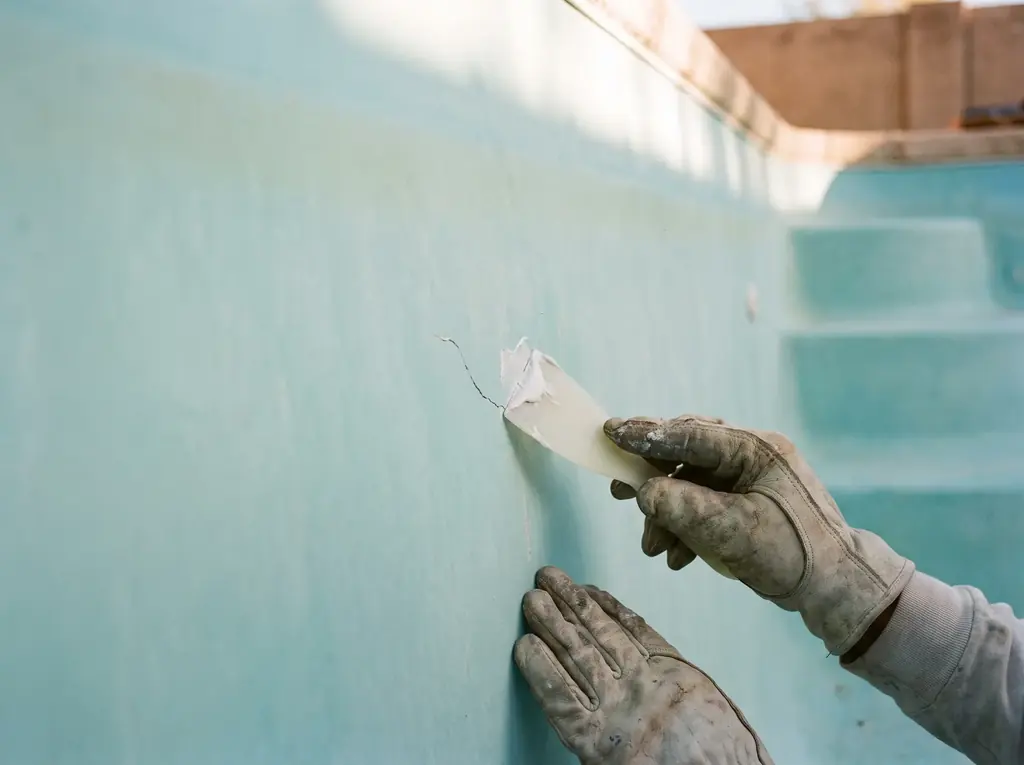
Spider cracks, blisters, leaks, fittings and steps repaired by technicians who work on fiberglass and nothing else.
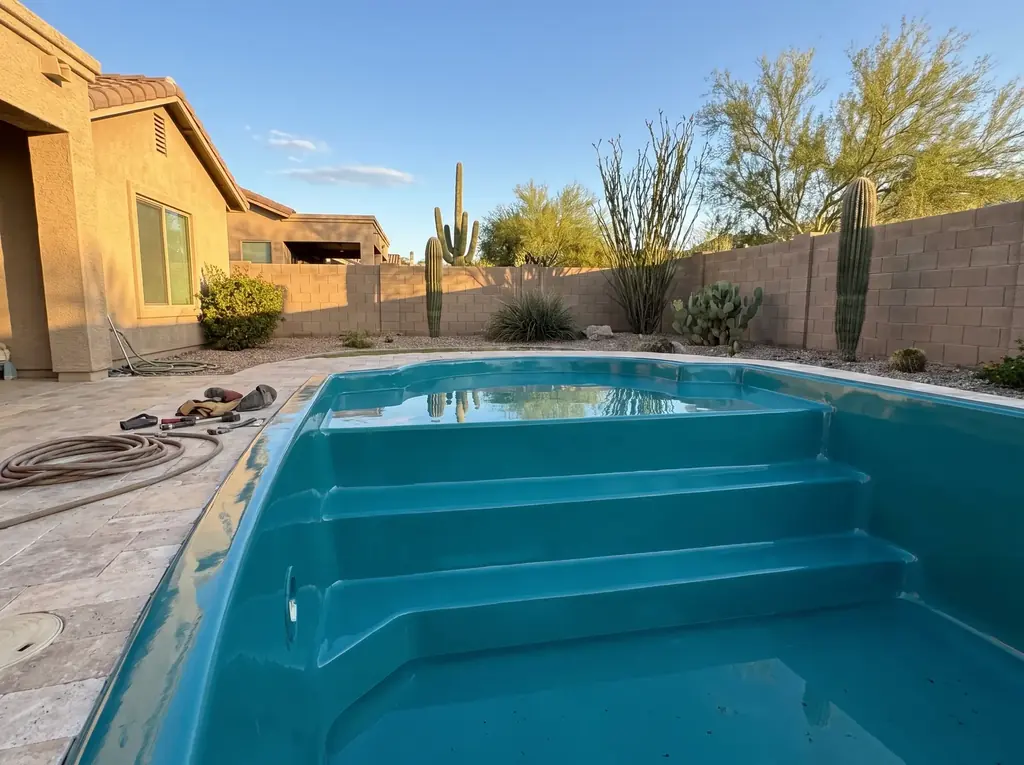
Calcium, metal and organic stains removed, chalky or faded gelcoat restored, and full refinishing for older shells.
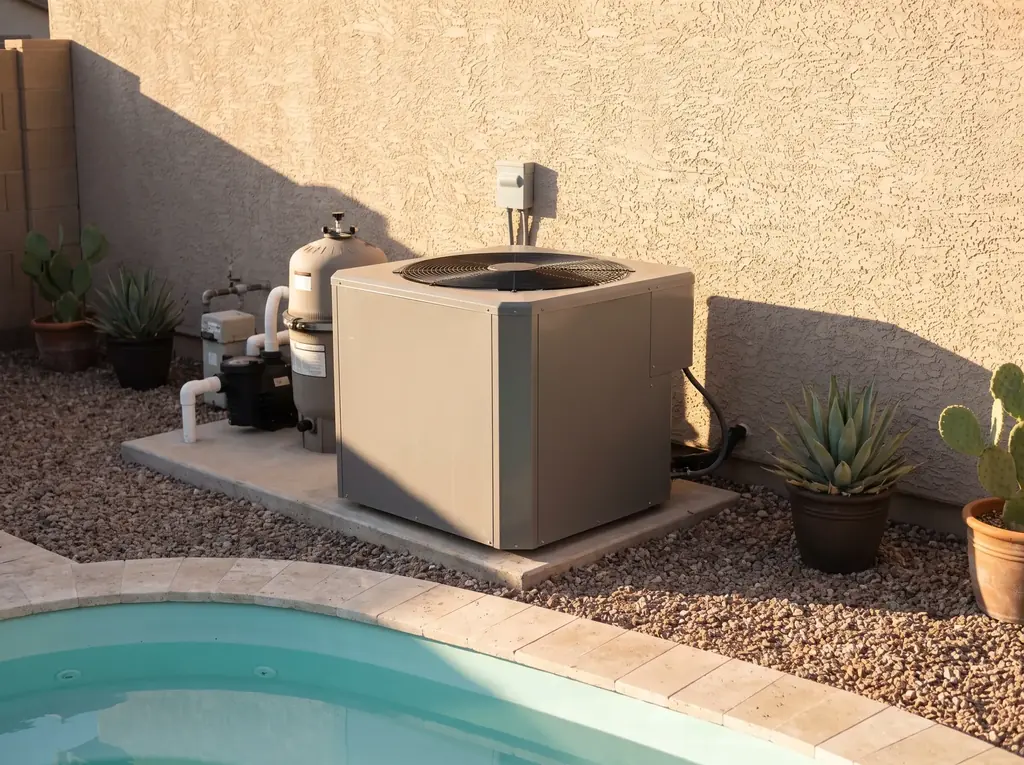
Gas heaters and heat pumps to stretch the swim season into spring and fall.
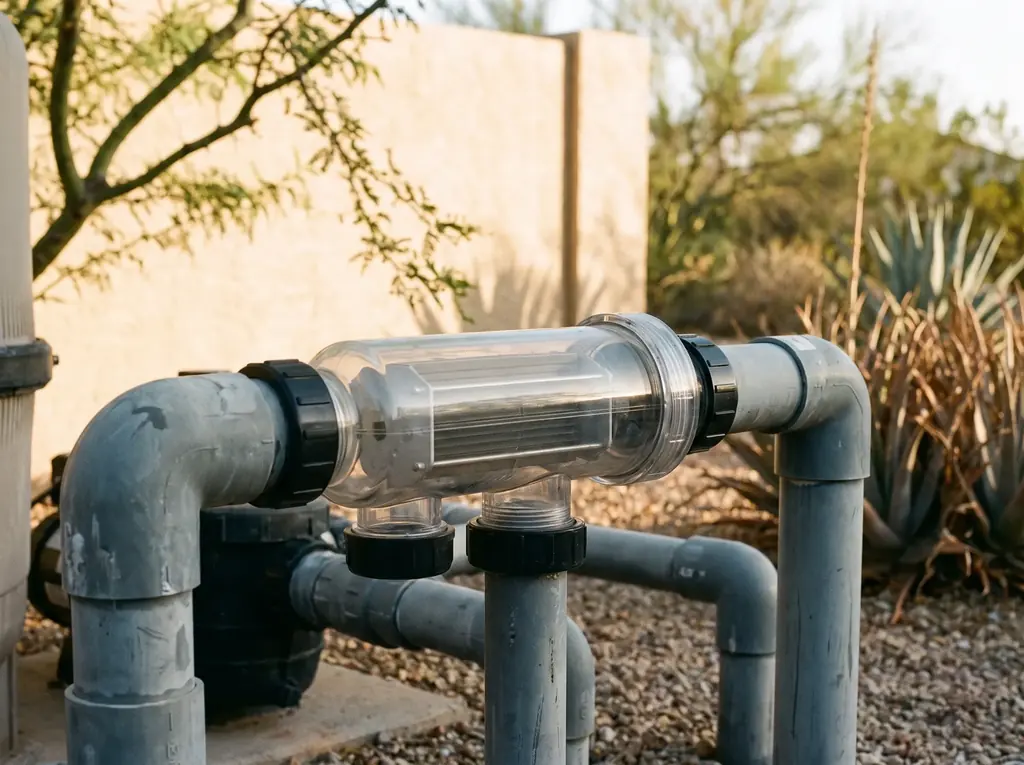
Salt chlorine generators set up and balanced for a fiberglass finish.
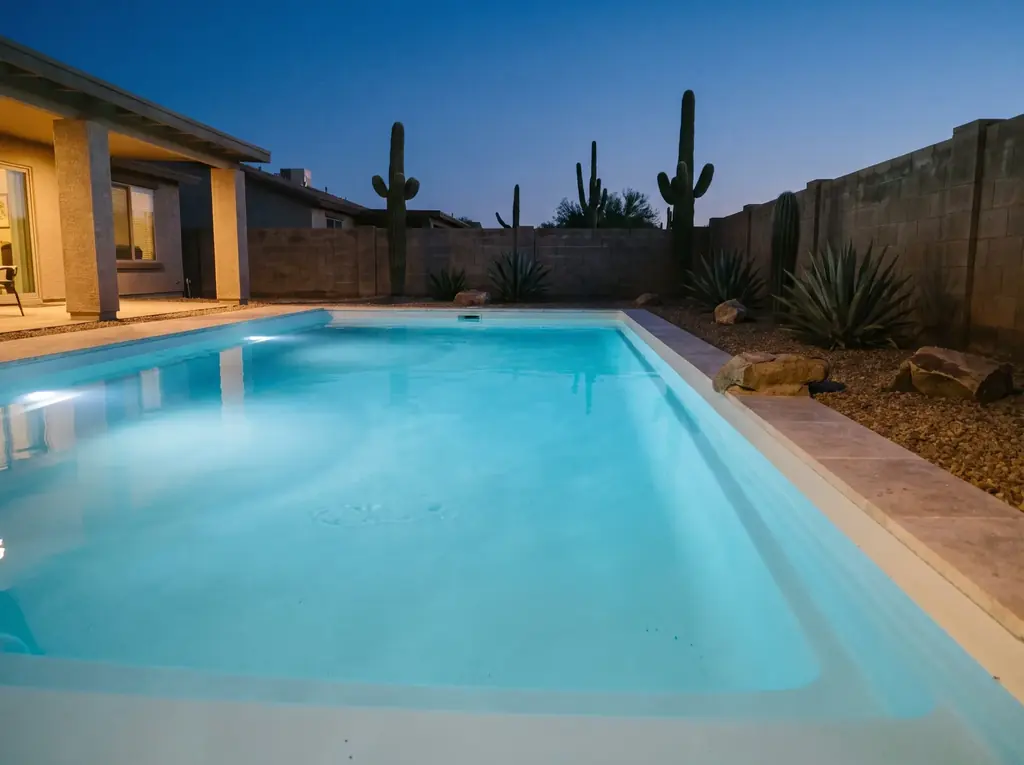
Color LED pool and spa lighting, new or retrofit.
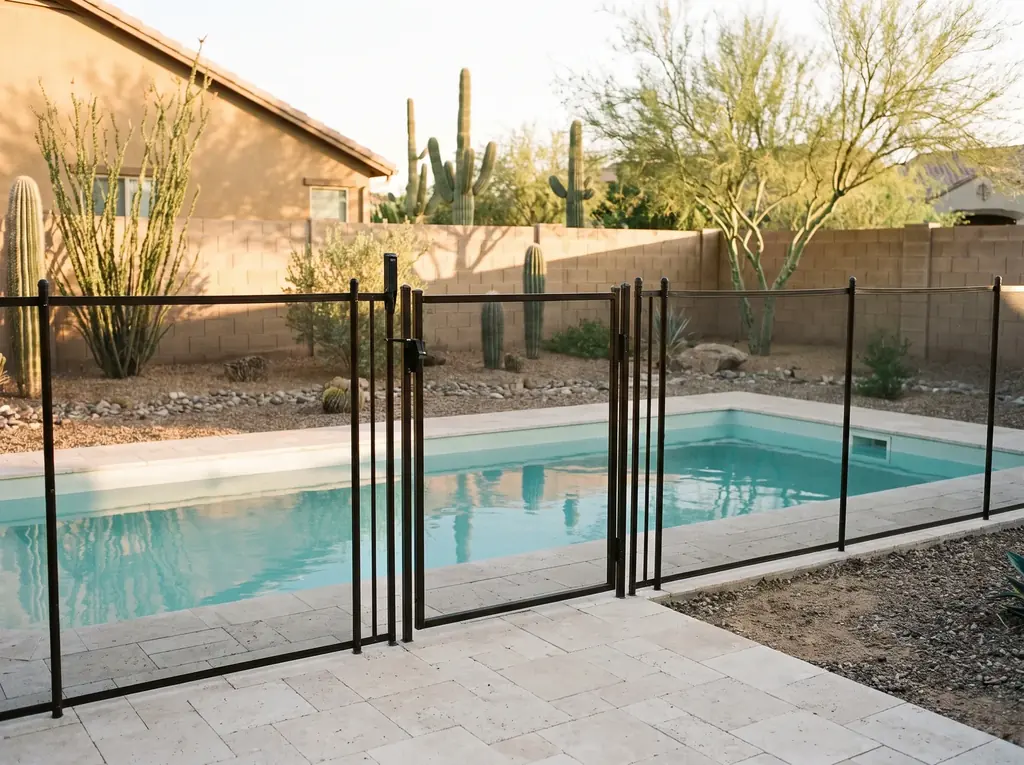
Barrier fencing, self latching gates and alarms planned to Arizona and local code.
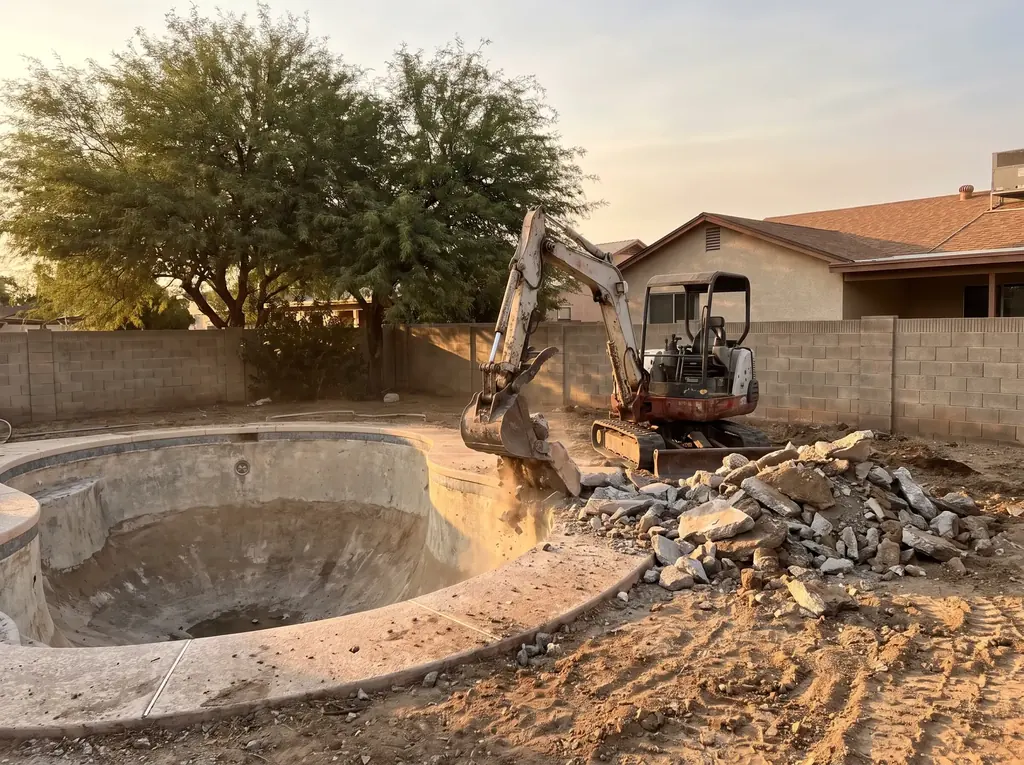
Replacing a failing older pool with a new fiberglass shell.
How the three main kinds of inground pool hold up to desert heat, hard water and monsoon season.
| Fiberglass | Concrete (gunite) | Vinyl liner | |
|---|---|---|---|
| Typical install time | A few weeks once permitted | Often several months | Several weeks |
| Surface | Smooth, non-porous gelcoat | Porous plaster, rough texture | Smooth vinyl, can puncture |
| Algae resistance | High | Lower, plaster gives algae a grip | Moderate |
| Hard water and scale | Deposits usually wipe off | Scale and etching are common | Can stain and fade the liner |
| Big recurring cost | None in most cases | Replaster every 10 to 15 years | Liner replacement as it ages |
| Desert sun and heat | UV resistant gelcoat | Plaster wears faster in heat | Liners fade and get brittle |
| Custom shapes | Chosen from manufacturer molds | Any shape or depth | Limited |
General comparisons. Your lot, your soil and your design choices affect timeline and cost, and we walk through yours at the estimate.
We are not a concrete builder who also sells fiberglass. Base prep, leveling, backfill and gelcoat care are what we do every week, so the details that decide whether a fiberglass pool sits right are second nature.
If your yard, your access or your wish list is a better match for concrete, we will tell you at the estimate. A pool you regret is bad for both of us.
We pull the permit with the right jurisdiction, prepare the HOA submittal where your community needs one, and plan the pool barrier your home requires from the start.
Service, repairs, equipment and gelcoat care from the same team that set the shell. You are never handed off to a stranger.
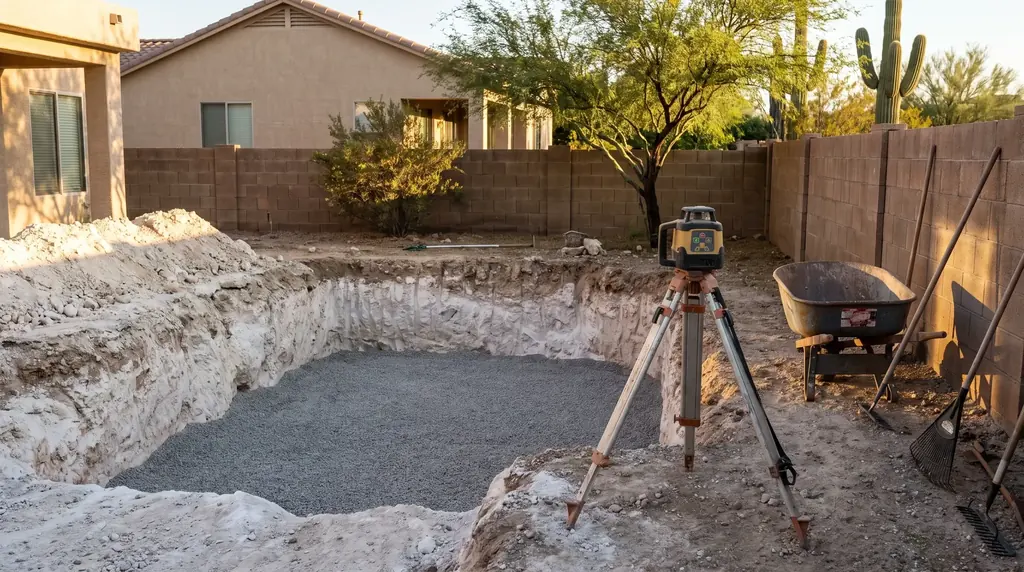
We walk the yard, check crane or delivery access, look for caliche and slope, and talk through shapes, sizes and budget. You get a written, itemized quote.
We finalize the shell, deck and equipment, then handle the building permit and any HOA architectural review. Barrier fencing is planned in from day one.
Blue stake locates first, then the dig, including any caliche, and a laser leveled, compacted gravel base for the shell to sit on.
The shell is lifted in, leveled and plumbed, then backfilled in stages as the pool fills so water and soil pressure stay balanced.
Coping and decking, pump, filter, heater and automation, then final inspection.
We fill, balance the water for gelcoat, show you how everything runs, and stay on as your service team.
Fiberglass wins for most Tucson back yards, but not every one. Here is what to weigh before you decide.
You choose from a catalog of manufacturer shapes and sizes. The range runs from plunge pools to large family pools, but a fully custom shape is a concrete job.
Shells travel by highway, so roughly 16 feet wide is a common upper limit. Length gives you more room to play.
The shell goes in by crane over the house or through a clear path into the yard. We check access at the estimate so install day has no surprises.
Fiberglass pools are built for swimming, lounging and play. If a deep diving end is a must, fiberglass is not the right choice.
We have not collected any reviews yet. When we do, they will appear here in full.
We install and service fiberglass pools in Tucson, Oro Valley, Marana, Catalina Foothills, Casas Adobes, Dove Mountain, Tanque Verde, Vail, Rita Ranch, Sahuarita, Green Valley and SaddleBrooke.
Areas we serveThe main limits are shape, size and access. Shells come from manufacturer molds, so you cannot get a fully custom shape, widths top out around 16 feet because shells travel by highway, and the shell has to reach the yard by crane or a clear path. Deep diving wells are generally not available. For most Tucson back yards those limits never come up, and we check each one at the estimate.
Once the permit and any HOA approval are in hand, the install itself typically takes a few weeks, from excavation through start-up. Permit and HOA review are the biggest variables, so the sooner you start, the sooner you swim.
The honest answer depends on the shell size, how easily a crane reaches the yard, what is under the ground, and the decking, equipment and features you choose. The upfront price of fiberglass is often close to a comparable concrete pool, and it usually costs less to own over time. We give a written, itemized quote after a free on-site visit.
With a quality shell, a proper install and balanced water, a fiberglass pool typically lasts for decades. There is no replaster cycle; long term care is mostly keeping the water balanced and the occasional cosmetic gelcoat work.
Not usually. The shell is designed to flex slightly, which helps with minor ground movement. When problems do happen they usually trace back to a poor base, poor backfill, or draining the pool without a plan, which is why install method and proper service matter.
Yes. An inground pool needs a building permit from your jurisdiction, whether that is the City of Tucson, Pima County, a town such as Oro Valley, Marana or Sahuarita, or Pinal County for SaddleBrooke. Arizona and local codes also require pool barriers in many situations. We handle the permit and plan the barrier.
Planning a new pool, or need help with the one you have? Tell us a little about it and we will call to set up a free visit anywhere in the Tucson metro.
We will call you to set up a free visit. If it is urgent, call (520) 555-0127.
Nothing was sent. Please call (520) 555-0127 and we will set up your free visit.