Fiberglass vs Concrete Pools in Tucson: An Honest Comparison
- Fiberglass pools only, installed and serviced
- Permit and HOA paperwork handled
- Crane access and caliche checked before you sign
- Written, itemized quotes
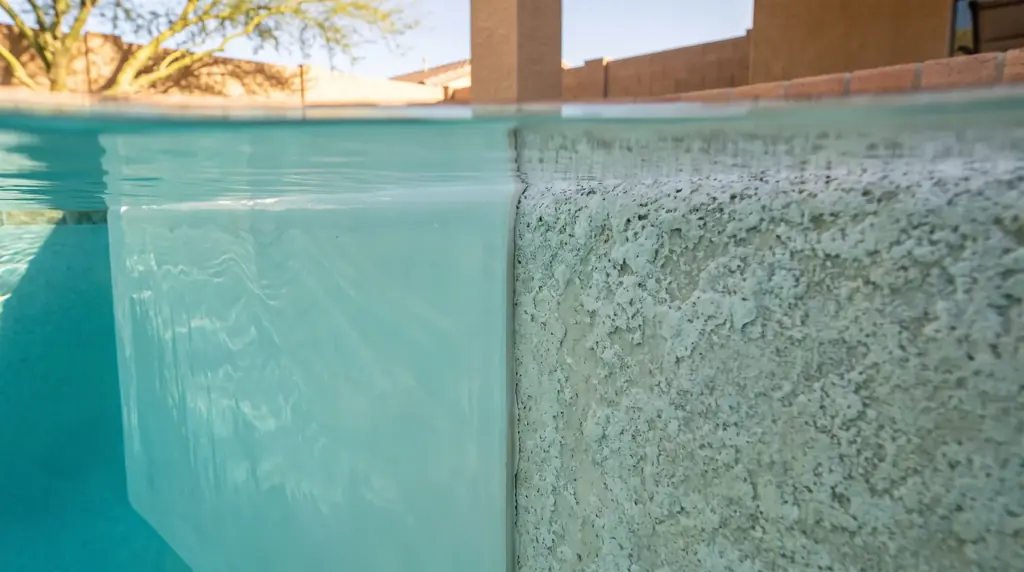
For most Tucson back yards, fiberglass is the better pool. It resists algae through monsoon season, lets hard water calcium wipe off instead of crusting, never needs replastering, and typically goes in within weeks once the permit clears. Concrete wins when you need a fully custom shape, a pool wider than a truck can carry, a deep diving end, or a yard no crane can reach.
That is the short version, from a company that installs fiberglass only. The rest of this guide explains why, including the parts that do not favor us.
Fiberglass and concrete, side by side
| Fiberglass | Concrete (gunite or shotcrete) | |
|---|---|---|
| How it is built | One-piece shell made in a factory, set by crane | Formed, sprayed and finished on site |
| Typical install time | A few weeks once permitted | Often several months |
| Interior surface | Smooth, non-porous gelcoat | Porous plaster or aggregate finish |
| Algae in monsoon season | Hard for algae to anchor | Plaster gives algae a grip |
| Tucson hard water | Calcium usually wipes off | Scale builds and etches the finish |
| Big recurring cost | No replaster cycle | Replaster commonly every 10 to 15 years |
| Caliche and clay | A little flex tolerates minor movement | Rigid shell can crack if the ground moves |
| Shape and size | Chosen from manufacturer molds, width limited by shipping | Almost any shape, size or depth |
| Diving depth | Generally not available | Available |
| Access needed | Crane over the house or a clear path | Hoses and equipment, no crane |
| Feel underfoot | Smooth on feet and knees | Rough enough to scrape toes |
General comparisons. Your lot, your soil and your choices change the details, which is what the estimate visit is for.
Why the desert tilts the decision toward fiberglass
Pool comparisons written for Florida or Ohio miss what makes Tucson different. Four local conditions do most of the work here.
Heat and monsoon algae
Triple digit afternoons in July and dust storms that dump organic matter into the pool are close to ideal algae conditions. Plaster is porous, so algae can root into the surface and come back after every bloom. Gelcoat is smooth and non-porous, so most owners find algae easier to keep off with less brushing and fewer chemicals.
Hard water on the waterline
Tucson water carries a lot of dissolved calcium, and evaporation in dry air concentrates it fast. On plaster and tile, that calcium bonds into crusty scale and etches the finish over time. On gelcoat it usually sits on top and comes off with a cleaner made for fiberglass.
Caliche and expansive clay
Many lots hit caliche, a cement-like layer, not far below the surface, and some neighborhoods sit on clay that swells when the monsoon soaks it. Both pool types have to be dug through caliche. The difference shows up later: a fiberglass shell has a little flex and tolerates minor ground movement that can crack a rigid concrete shell.
Sun on the finish
Gelcoat is formulated to resist UV. Plaster in hot sun and hard water tends to wear faster, which is part of why replastering here often comes sooner than the national average suggests.
More on why fiberglass suits Tucson
Which pool lasts longer, fiberglass or concrete?
Both can last for decades, so the useful question is what each one needs along the way.
A concrete pool’s structure can last a very long time, but the plaster interior is a wear layer. In hot, hard water climates it commonly needs replacing every 10 to 15 years, and each replaster means draining the pool, chipping or prepping the old surface, and weeks without a pool. Tile and acid washes come up in between.
A fiberglass shell has no replaster cycle. With balanced water the gelcoat typically lasts for decades. After many years it may fade or turn chalky, especially on older shells, and it can be refinished. That is a cosmetic job, not structural, and it is not on a fixed schedule.
Cost upfront and cost to own
The upfront price of a fiberglass pool is often close to a comparable concrete pool. Which one comes in lower for your yard depends on the shell or design you pick, crane access, how much caliche is under the yard, and the deck, equipment and features around it. Any guide that names one winner on price without seeing your yard is guessing.
The cost to own is where the two separate. A fiberglass pool usually needs less chemical, less brushing and no acid washes, and it never carries a replaster bill. A concrete pool will need that replaster at least once over a typical ownership, plus the chemistry and labor that porous plaster asks for in between.
Our cost guide breaks down what moves the price of a fiberglass pool in Tucson, line by line.
When concrete is the better call
We would rather lose a job than install the wrong pool. Concrete is the right choice if any of these is true for you.
You want a shape no mold offers
Fiberglass comes in a wide catalog of shapes and sizes, from plunge pools to long family pools. A free form design traced around boulders, a pool built into a sloping Foothills lot in an unusual footprint, or an architectural shape you have drawn yourself is a concrete job.
You need it wider than about 16 feet
Shells travel by highway, so roughly 16 feet wide is a common upper limit. Length gives you more room. If the plan needs a wide, square pool, concrete is the way to get it.
You want a deep diving end
Fiberglass pools are built for swimming, lounging and play. Deep diving wells are generally not available.
No crane can reach the yard
The shell arrives in one piece. If there is no way to lift it over the house or bring it through a clear path, fiberglass is off the table. We check this at the estimate, and it is rarer than people expect, even on tight central Tucson lots.
Fiberglass vs concrete questions
Which pool lasts longer, fiberglass or concrete?
Both structures can last for decades. The difference is upkeep along the way: a concrete pool's plaster commonly needs replacing every 10 to 15 years, sooner in hot, hard water areas like Tucson, while a fiberglass pool has no replaster cycle and its gelcoat typically lasts for decades with balanced water.
What is the average lifespan of a concrete pool?
The concrete shell itself can last many decades. The interior plaster is the part that wears, and it commonly needs replastering every 10 to 15 years. Desert heat and hard water tend to shorten that interval.
What happens to a fiberglass pool after 25 years?
On a quality shell that has been installed well and kept balanced, usually not much beyond cosmetic wear. The gelcoat may have faded or turned a little chalky, and some owners choose to refinish it at that point. Structural problems at that age usually trace back to a poor base, poor backfill or a drain done without a plan.
Do fiberglass pools crack easily?
Not usually. The shell is designed to flex slightly, which helps it handle minor ground movement. Small surface cracks in the gelcoat can happen and are repairable. Serious cracking is uncommon and is most often caused by installation problems or by draining the pool without a professional.
What is the downside of fiberglass pools?
Shape, width and access. Shells come from manufacturer molds, width is capped at roughly 16 feet by highway shipping, deep diving ends are generally not available, and the shell has to reach the yard by crane or a clear path. If none of those rules out your plan, fiberglass is usually the better pool for Tucson.
Find out if fiberglass fits your yard
Send us a photo of the back yard and a photo of the route from the street. We will come out, check the ground and the crane path, and give you a straight answer.
- Call(520) 555-0127
- Emailinfo@tucsonfiberglasspools.com
- HoursMon to Fri, 7am to 5pm. Saturday by appointment.
Thanks, we have your request
We will call you to set up a free visit. If it is urgent, call (520) 555-0127.
Online requests are not switched on yet
Nothing was sent. Please call (520) 555-0127 and we will set up your free visit.