How Long a Fiberglass Pool Install Takes, Step by Step
- Fiberglass pools only, installed and serviced
- Permit and HOA paperwork handled
- Crane access and caliche checked before you sign
- Written, itemized quotes
Once the permit and any HOA approval are in hand, installing a fiberglass pool typically takes a few weeks, from the first scoop of dirt to start-up. The whole project, from first call to first swim, takes longer, and the paperwork usually takes more of that time than the construction does.
That is the real answer to how long a fiberglass pool takes. The shell is built in a factory before it ever reaches your street, so the on-site work is short compared with a concrete pool, which is often several months of forming, spraying, curing and plastering. What sets the pace in Tucson is the permit office and the HOA, not the crew. Here is every stage in order.
From first call to first swim
1. On-site estimate
We walk the yard, measure, check crane access from the street, look at slope and setbacks, and look for signs of caliche. You get a written, itemized quote. The visit itself is about an hour.
2. Shell choice and layout
You settle on a shell, the deck and the features. We mark the outline on the ground so you can stand where the steps will be before anything is dug.
3. Permit, HOA review and barrier plan
This is the longest wait of the whole project and the one nobody can rush. The permit comes from your jurisdiction: City of Tucson, Pima County, the Town of Oro Valley, Marana or Sahuarita, or Pinal County for SaddleBrooke. In master planned communities such as Dove Mountain, Rita Ranch and SaddleBrooke, the HOA architectural submittal usually runs alongside it. We prepare both, plan the pool barrier, and order the shell so it is ready when approval lands.
4. Locates and excavation
Arizona 811 marks buried utilities first. Then the dig begins. On soft ground it is quick. On caliche or rock it is slower, because the layer has to be broken rather than scooped, and that is the stage most likely to stretch.
5. Base and crane set
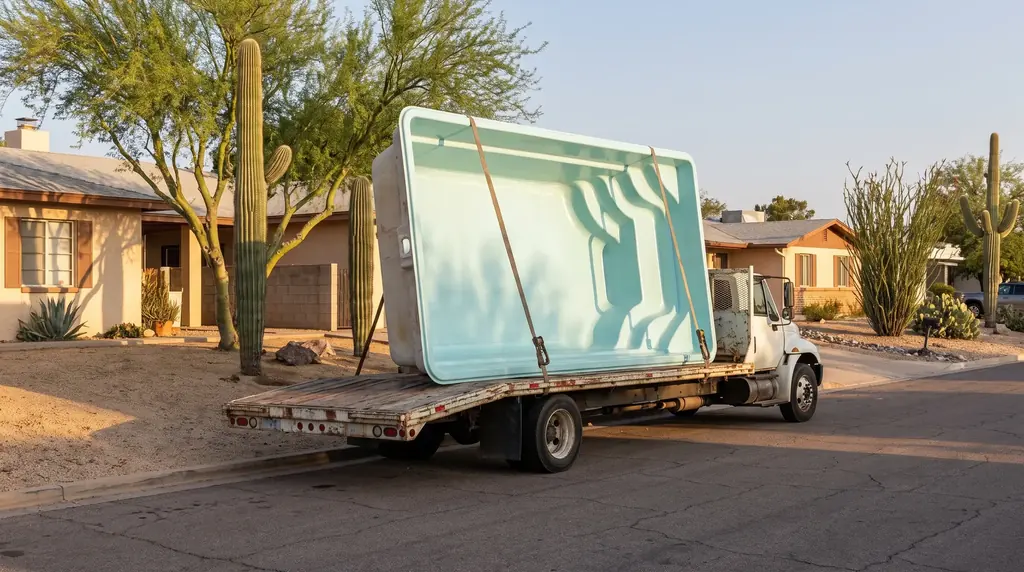
A compacted gravel base is laid and laser leveled, because the shell is only as level as what sits under it. On set day the shell arrives by truck and a crane lifts it over the house into the hole, where it is checked level in every direction.
6. Plumbing and backfill
Lines are run to the equipment pad and pressure tested. Then the shell is backfilled in stages while it fills with water, so the pressure inside and outside the walls stays balanced. This step is not rushed.
7. Coping, deck and equipment
Coping ties the deck to the shell, then the deck goes down and slopes away from the pool so monsoon water drains off. The pump, filter, heater and any automation are installed and wired. Your jurisdiction inspects at its required points along the way.
8. Fill, start-up and walkthrough
The pool is topped off and the water balanced for gelcoat. We start the equipment, check everything runs, and walk you through how it works.
What stretches a Tucson install
Most delays come from a short list, and almost all of them can be planned for.
Permit and HOA review
Review times vary by jurisdiction and by season, and an HOA that meets monthly adds its own schedule. Starting the paperwork the moment you sign is the single best way to shorten the project.
Caliche and rock
A dig that hits hard caliche or rock takes heavier equipment and more time. We look for it at the estimate so it is in the plan, not a surprise.
Monsoon weather
Summer storms can flood an open hole and soften clay, and a wet site has to dry before work continues. Excavation and backfill in July and August carry more weather risk than in the cooler months.
Access
A tight central Tucson lot or a sloped Foothills street needs a crane booked and positioned with care. It does not usually add much time, but it does need planning before set day.
Why fall and winter are the best time to start
Pool builder searches in Tucson run highest from January to March, as people realize summer is coming. By then schedules fill and permit offices get busier.
Starting in fall or early winter flips that. Permits and HOA review happen while demand is lower, the dig and the deck work happen in cool weather instead of triple digit heat or monsoon storms, and the pool is ready before the May and June heat arrives. If you want to swim this summer, the time to call is the fall before.
Install timeline questions
How long does it take to install a fiberglass swimming pool?
Once the permit and any HOA approval are in hand, the install typically takes a few weeks, from excavation through start-up. Caliche, monsoon weather and inspection scheduling are what move it within that.
How long does it usually take to get a pool installed?
From first call to first swim, the full project takes longer than the install, because permit and HOA review come first. Fiberglass shortens the construction part. A concrete pool's construction is often several months on its own.
How soon can you swim in a new pool?
Shortly after it is filled, once the water is balanced and the equipment is running properly. We tell you when it is ready at the start-up walkthrough.
What is the cheapest time of year to install a pool?
In Tucson, demand for pool builders peaks from January to March. Planning in the fall gives you the most scheduling room and puts the permit, the dig and the deck work in the cooler, drier months.
Do you need a permit to build a pool in Arizona?
Yes. An inground pool needs a building permit from your jurisdiction, and Arizona and local codes require a pool barrier in many situations. We handle the permit and plan the barrier with you.
Start the clock on your pool
Send us a photo of the back yard and the route from the street. We will come out, check the crane path and the ground, and get the paperwork moving.
- Call(520) 555-0127
- Emailinfo@tucsonfiberglasspools.com
- HoursMon to Fri, 7am to 5pm. Saturday by appointment.
Thanks, we have your request
We will call you to set up a free visit. If it is urgent, call (520) 555-0127.
Online requests are not switched on yet
Nothing was sent. Please call (520) 555-0127 and we will set up your free visit.